
Soil Moisture Sensor Depth: Where to Measure in the Root Zone
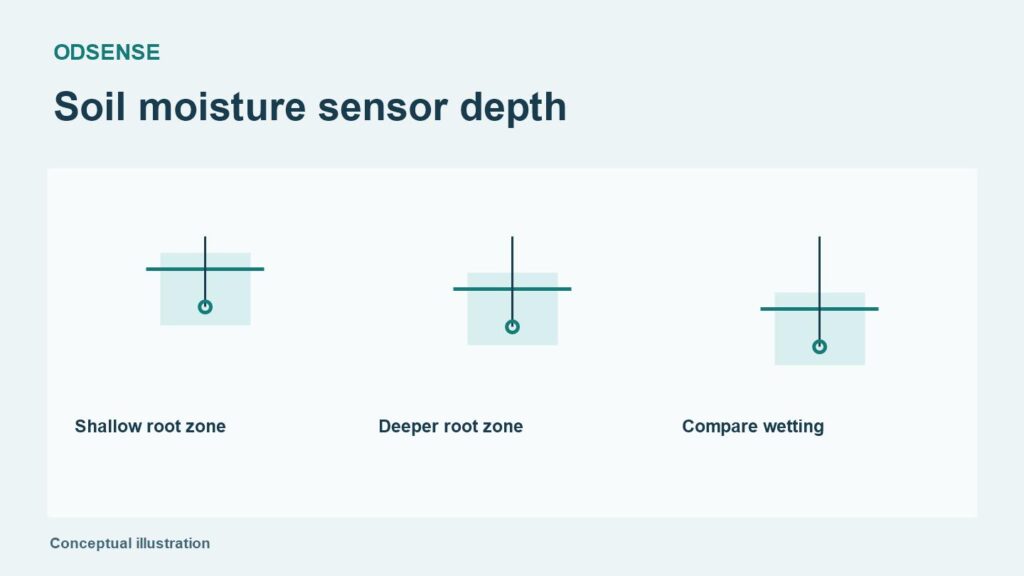
Choose soil moisture sensor depth from the active crop root zone and the distribution of irrigation water. A shallow sensor can show a wetting event quickly. A second sensor deeper in the root zone shows whether the water reached lower roots. Choose locations that represent the soil and irrigation zone the measurements will inform.
Start with the active root zone
Estimate rooting depth at the current growth stage and check whether compacted layers, a shallow soil profile, or a high water table restrict roots. University of Minnesota Extension describes placing paired sensors around one-third and two-thirds of the crop root zone as a starting arrangement. Use the soil monitoring network installation guide to account for changes between management zones.
Match the horizontal position to the wetting pattern
Under drip irrigation, the distance from the emitter and the plant row matters alongside depth. Install within a representative wetted area. Avoid placing all probes in an unusually wet spot. In soil with different textures or irrigation zones, compare readings within each zone before aggregating them. Keep good probe contact with undisturbed soil where practical. Oregon State Extension discusses location selection and installation.
Compare the two depths after a known event
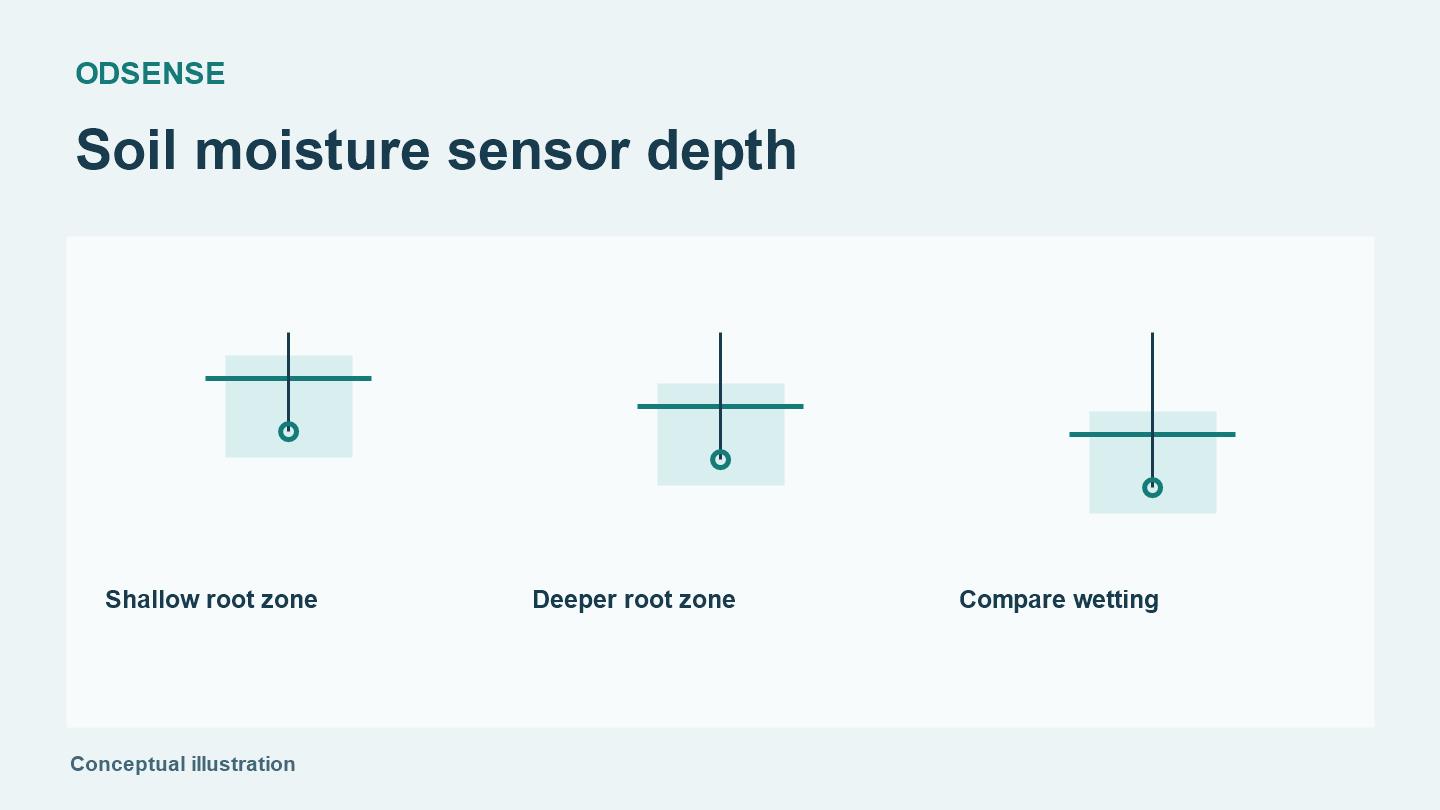
Log both traces before, during, and after the same irrigation event. A shallow rise with no deep change can indicate that water has yet to reach the deep sensor, or that the deeper location is outside the wetted zone. A rapid deep response can warrant checking preferential flow along the installation hole. Check several events before making a change. The soil moisture sensor air-gap guide covers installation artifacts that can mislead this comparison.
Record the depth so the data can be interpreted later
Document depth to the sensing volume, distance from the row or emitter, soil texture, and the crop stage. Keep the depths as separate channels. Virginia Tech Extension explains how deeper sensors can help interpret irrigation penetration. If thresholds are required, use the soil moisture calibration guide to check what the reading represents.
Frequently asked questions
Do both depths need to reach the same moisture percentage?
Different soil layers can hold different amounts of water. Evaluate each sensor's change and recovery against its own baseline and the crop's observed rooting pattern.