
How to Install a Soil Monitoring Network: Depth, Zones and Records
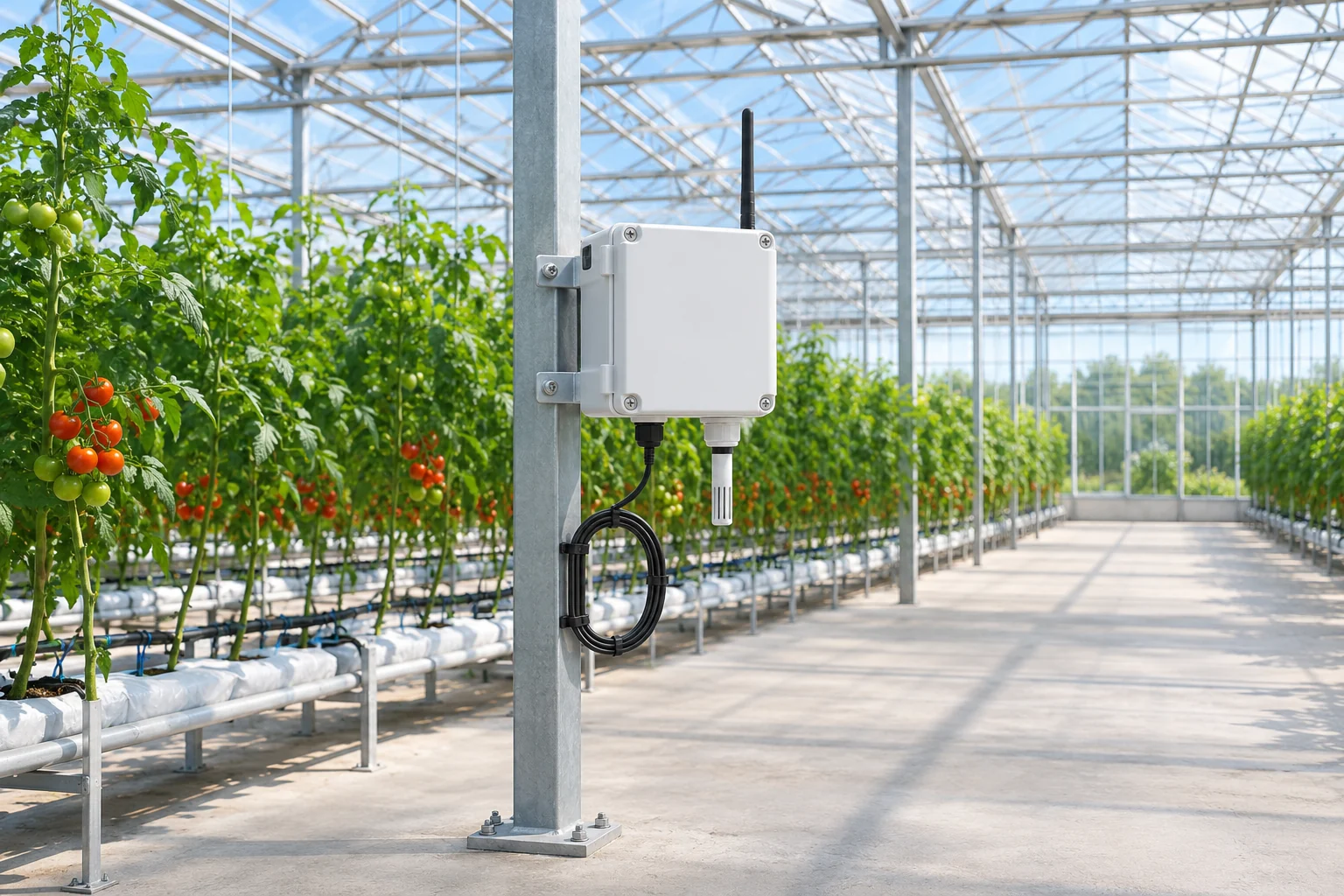
Using sensors for soil monitoring requires a plan for where each reading comes from. Define the management zones, depths and purpose of the observations before selecting the final quantity of probes. A connected sensor at an arbitrary location does not automatically represent the whole field or growing area.
Choose zones before choosing positions
Review meaningful differences in soil or substrate, irrigation arrangement and the crop system with the operator. Mark the intended zones on a plan. Keep the reason for each point so its role remains clear when equipment is replaced or the growing layout changes.
| Planning decision | Record to retain |
|---|---|
| Zone selection | The differences the measurement plan is intended to represent |
| Depth | The root-zone or process question assigned to that depth |
| Installation | Approved probe orientation and surrounding material |
| Identification | A stable point name linked to the physical sensor |
| Data use | The person and decision associated with the record |
Follow the probe-specific installation method
Obtain the instructions for the actual probe and medium. Ask how placement and contact should be established without assuming that one procedure fits every design. Record installation conditions and any departure from the approved method so later differences can be investigated.
For maintenance access, include cabling, power and the practical replacement task. Keep the sensor identifier separate from the point identifier: replacing equipment should not destroy the history of which zone and depth the record represents.
Validate a pilot as a measurement system
Check the reported quantity, unit and time record at the receiving system. Where a reference comparison is required, agree a suitable procedure and acceptance criteria before collecting results. Make the sampling and sensor conditions comparable rather than treating any nearby sample as an exact reference.
Review the result with the operator. Ask whether the record answers the original management question and whether missing readings are recognizable. A successful communication check does not establish that the selected position represents the intended soil condition.
Control expansion and future changes
- Retain a map and point identifiers.
- Record probe configuration and relevant documents.
- Keep reference checks with the location history.
- Note relocation, replacement and management changes.
- Assign inspection and interpretation responsibilities.
Use the soil sensor information with the agricultural measurement plan to prepare the measurement requirements. Confirm the specific device model, fitted options and applicable documents before ordering.
Frequently asked questions
Should every point use the same depth?
Choose depths against the monitoring question and actual growing system rather than a universal rule.
Does a wireless connection verify probe placement?
No. Communications and measurement representativeness require separate checks.