Measurement principle
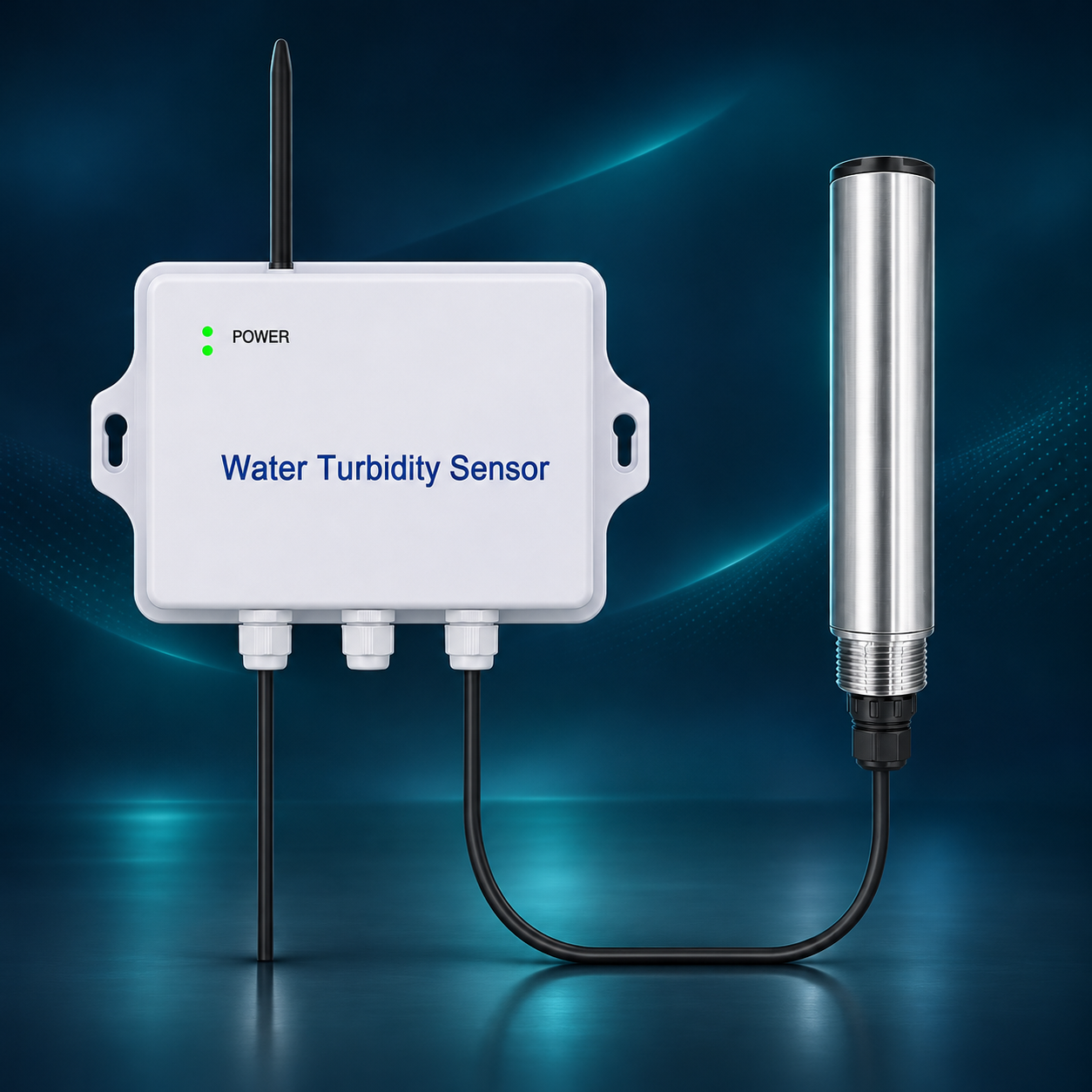
The YF500 uses 90-degree scattered light. An infrared LED illuminates the sample, and an optical receiver measures light scattered by particles. Turbidity describes the optical effect of suspended particles; it does not identify their composition.
Turbidity monitoring
Turbidity readings help describe changes in water clarity. Choose the range for the expected sample conditions and plan probe cleaning to reduce fouling.
Technical specifications
| Model | YF500-NTU |
|---|---|
| Operating voltage | DC 10 V–30 V (standard 24 V DC) |
| Waterproof rating | IP68 |
| Pressure resistance | 0.6 MPa |
| Output method | RS485 (default); optional LoRaWAN / WiFi / 4G |
| Default cable length | 5 m; cable length can be customised on request |
| Mounting | Pipe-mount / wall-mount |
| Dimensions | 124 × 94 × 45 mm (main unit) |
| Operating temperature | 0 °C – 50 °C |
| Operating humidity | 0 – 99 %RH (no condensation) |
| Detection type | Range | Resolution | Accuracy |
|---|---|---|---|
| Turbidity (0–50 range) | 0.00 – 50.00 NTU | 0.01 NTU | ±5 %FS (25 °C); ±0.5 °C |
| Turbidity (0–200 range) | 0.0 – 200.0 NTU | 0.1 NTU | ±5 %FS (25 °C); ±0.5 °C |
| Turbidity (0–1000 range) | 0.0 – 1000.0 NTU | 0.1 NTU | ±5 %FS (25 °C); ±0.5 °C |
| Turbidity (0–4000 range) | 0 – 4000 NTU | 1 NTU | ±5 %FS (25 °C); ±0.5 °C |
| Model | Communication | Recommended use |
|---|---|---|
| YF500-NTU(R) | RS485 Modbus-RTU | Integration with PLCs, controllers and data loggers |
| YF500-NTU(L) | LoRaWAN | Remote monitoring of dispersed sites without data cabling |
| YF500-NTU(W) | WiFi | Sites with WiFi coverage and cloud-based management |
| YF500-NTU(G) | 4G | Remote sites without WiFi; data transmission over the cellular network |
YF500 online turbidity monitoring
The YF500 measures turbidity for water monitoring applications. Four ranges are listed: 0–50, 0–200, 0–1,000 and 0–4,000 NTU. Choose the range according to the water and process being monitored. The listed standard output is RS485; LoRaWAN, WiFi and 4G are communication options associated with other versions.
Interpreting turbidity
Turbidity describes how suspended material affects the passage of light through water. Readings can change when particles enter or settle out of the water, when flow changes, or when treatment conditions vary. It is a useful trend measurement, but it does not identify the material causing a change and should be interpreted with other relevant water-quality information.
Choose measurement points that answer a defined question. In a treatment system, the point may be selected to observe changes across a process stage. In aquaculture or surface water monitoring, consider the mixing, flow and seasonal conditions that can make one location different from another.
Selecting a measurement range
The available ranges have different listed resolutions: 0.01 NTU for the 0–50 range, 0.1 NTU for the 0–200 and 0–1,000 ranges, and 1 NTU for the 0–4,000 range. The product specifications list ±5% FS at 25 °C. Consider normal readings as well as expected peaks when selecting a version. Resolution and accuracy are different specifications and should be reviewed separately.
Probe placement and sample conditions
Install the probe where water is representative of the process being monitored. Flow patterns, bubbles, sediment buildup and deposits on the optical surface can affect the measurement. Provide room to remove the probe for inspection and cleaning, and protect the cable from tension or damage. Follow the supplied installation instructions for the selected arrangement.
When comparing readings between locations or over time, record the range, mounting position, sample conditions and any maintenance performed. If the process has high suspended solids or biological growth, plan inspection around the actual fouling conditions.
Communication and maintenance
RS485 Modbus RTU is the standard interface; LoRaWAN, WiFi and 4G are optional communication configurations. Confirm the selected configuration and receiving system when ordering. The listed supply range is DC 10–30 V and the default cable length is 5 m, with customized lengths available.
Clean and calibrate the sensor according to the supplied instructions and the requirements of the water being measured. Use appropriate reference procedures for the intended application. For a quotation, provide the water type, expected NTU range, installation location, cable length and interface. Explore the water quality sensor range and aquaculture monitoring solution for related measurements.
Selection and integration
Industry applications
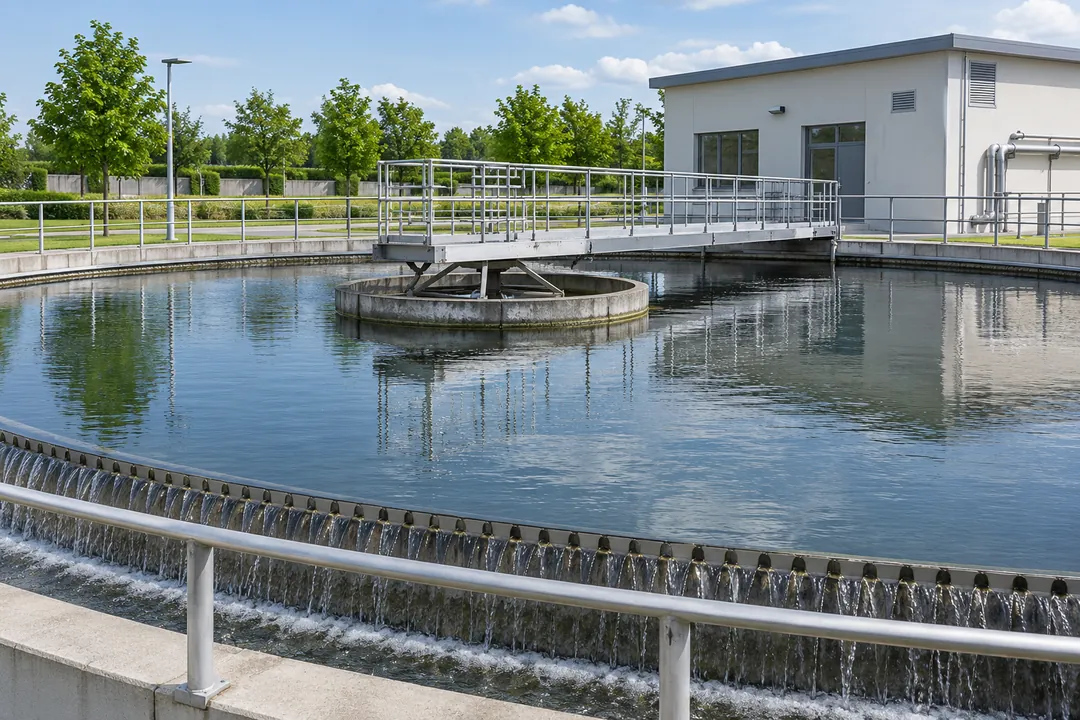
- Water treatment
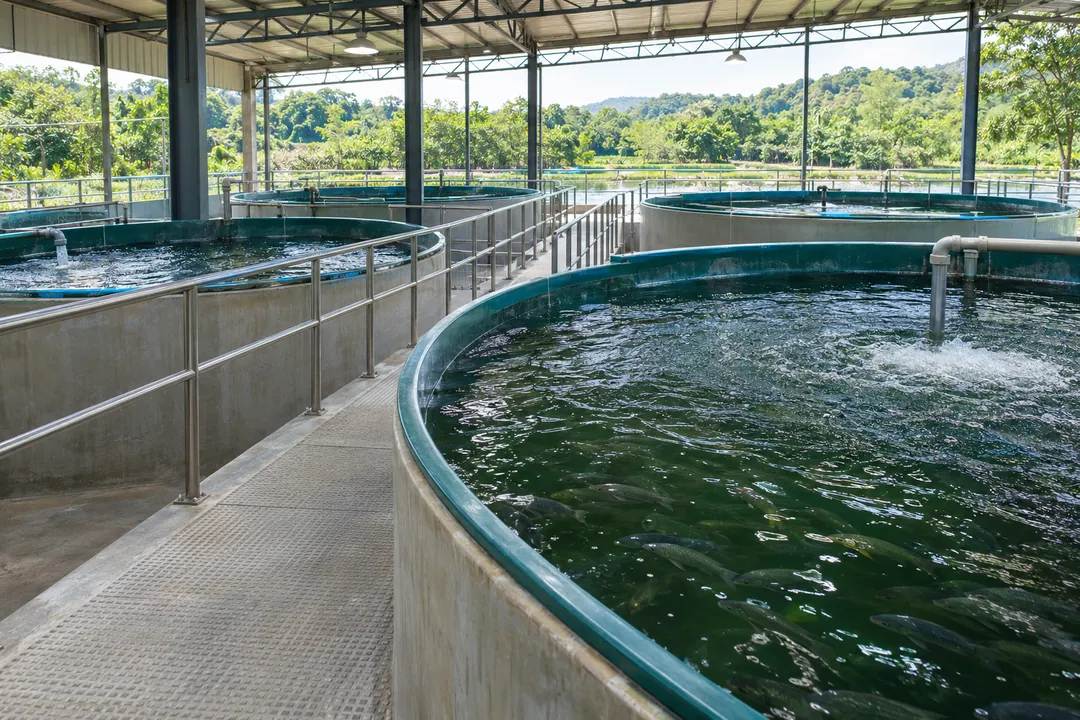
- Aquaculture
- Environmental monitoring