Oxidation-reduction potential monitoring
Technical specifications
| General Parameters | |
|---|---|
| Model | YF500-ORP |
| Operating Voltage | DC 10V–30V, standard 24V DC |
| Power Consumption | 0.5W at 24V DC |
| Waterproof Rating | IP68 |
| Pressure Resistance | 0.6 MPa |
| Standard Communication | RS485, Modbus RTU |
| Optional Communication | LoRaWAN / WiFi / 4G |
| Default Cable Length | 5 meters; customized cable lengths available |
| Mounting | Pipe mount / Wall mount |
| Main Unit Dimensions | 124 × 94 × 45 mm |
| Operating Temperature | 0°C to 50°C |
| Operating Humidity | 0–99% RH, non-condensing |
| Sensor Measurement Specifications | |||
|---|---|---|---|
| Measurement | Range | Resolution | Accuracy |
| ORP | -1999 to 1999 mV | 1 mV | ≤ ±5 mV |
| Temperature | 0 to 60°C | 0.1°C | ±0.5°C |
| Model | Communication | Recommended Use |
|---|---|---|
| YF500-ORP(R) | RS485 Modbus RTU | PLC, controller and data logger integration |
| YF500-ORP(L) | LoRaWAN | Large-area and low-power wireless monitoring |
| YF500-ORP(W) | WiFi | Local network and facility monitoring |
| YF500-ORP(G) | 4G | Remote sites without wired network access |
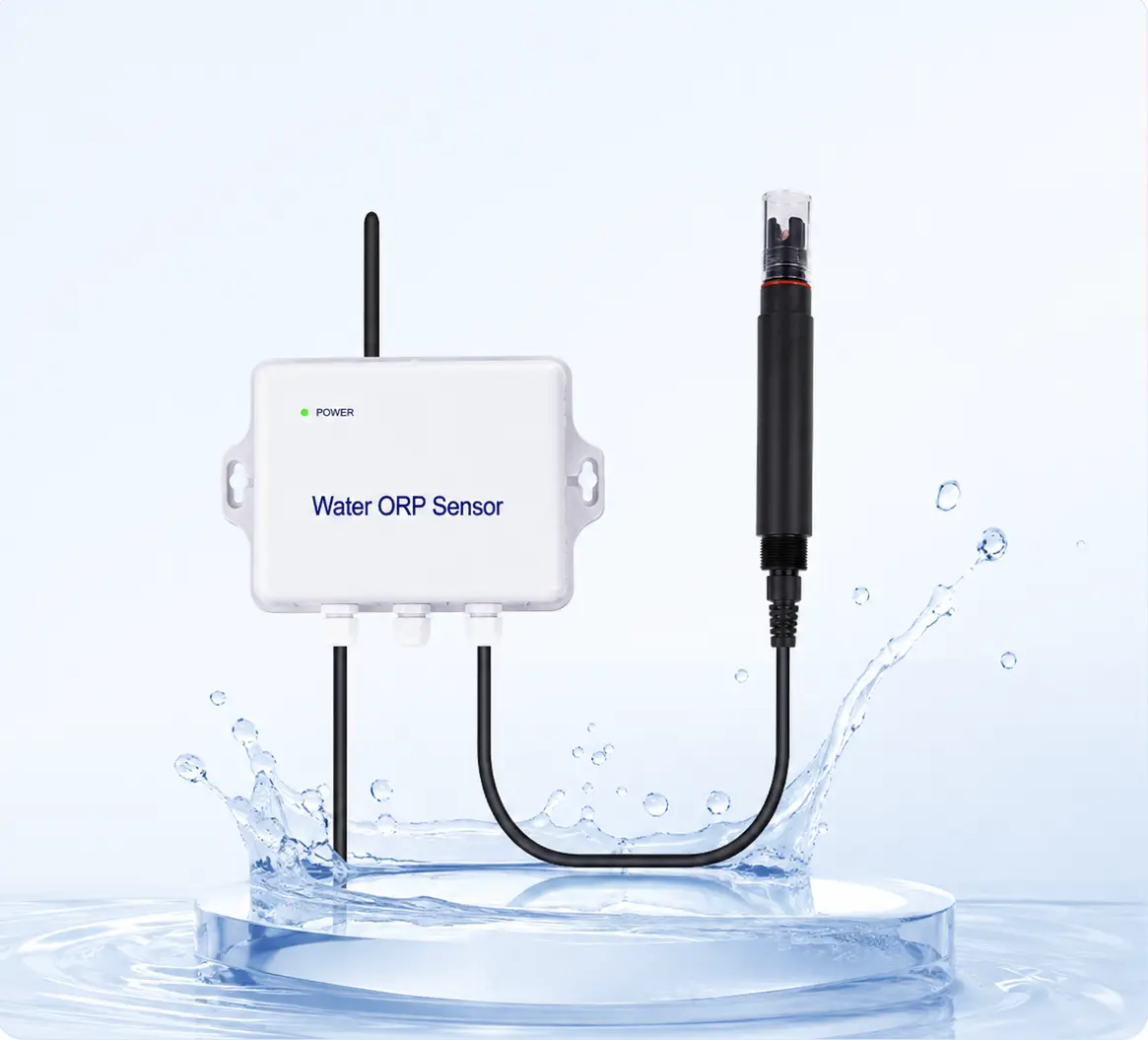
YF500-ORP online water quality monitoring
The YF500-ORP measures oxidation-reduction potential and temperature for water monitoring. Its listed ORP range is −1,999 to 1,999 mV, with 1 mV resolution and accuracy of ≤ ±5 mV. The listed standard output is RS485 Modbus RTU; wireless communication depends on the selected ordering version.
Understanding an ORP reading
Oxidation-reduction potential is expressed in millivolts and describes the electrical potential associated with oxidation and reduction conditions in water. It can help teams observe changes in a process, but it does not identify every chemical species or replace other measurements needed to understand the water. Interpret values with the process, water composition, pH and other relevant site information.
A reading represents the water at the probe. Mixing, dosing, flow and electrode condition can all influence a trend. Compare readings under known conditions and document the measurement location when reviewing data from different parts of a system.
Applications and measurement points
ORP may be monitored in water treatment, aquaculture and industrial processes where operators need an ongoing view of changing water conditions. Select the measurement point based on the purpose of the reading, the availability of representative flow and safe access for maintenance. A point immediately beside a dosing outlet may produce a different reading from a well-mixed section downstream.
The listed sensor temperature measurement range is 0–60 °C. The main unit operating temperature is listed separately as 0–50 °C. Consider the limits of each component and the water being measured when planning an installation.
Install and connect the sensor
Follow the supplied mounting and immersion instructions for the selected probe. Route the cable to avoid tension, crushing or interference with maintenance work. Leave enough access for the electrode to be removed and checked. The product specifications list a standard 5 m cable with customized lengths available, and pipe-mount or wall-mount arrangements for the main unit.
The YF500-ORP(R) is listed with RS485 Modbus RTU. The L, W and G variants are listed with LoRaWAN, WiFi and 4G respectively. Specify the receiving controller, network and power requirements with the order; these communication methods are model options rather than interfaces guaranteed on every version.
Inspection and calibration
Keep the electrode clean and inspect it for coatings, damage or deposits that could affect its contact with water. Use suitable reference solutions and follow the supplied maintenance instructions. Record calibration and inspection results, and investigate unexpected readings alongside process changes and probe condition.
For product selection, describe the water type, expected operating conditions, mounting arrangement, cable length and preferred interface. Explore the water quality sensor range and the aquaculture monitoring application for complementary measurements.
Selection and integration
Industry applications
- Water treatment
- Wastewater treatment
- Process industries