
PM2.5 Sensor Collocation: How to Compare with a Reference Monitor
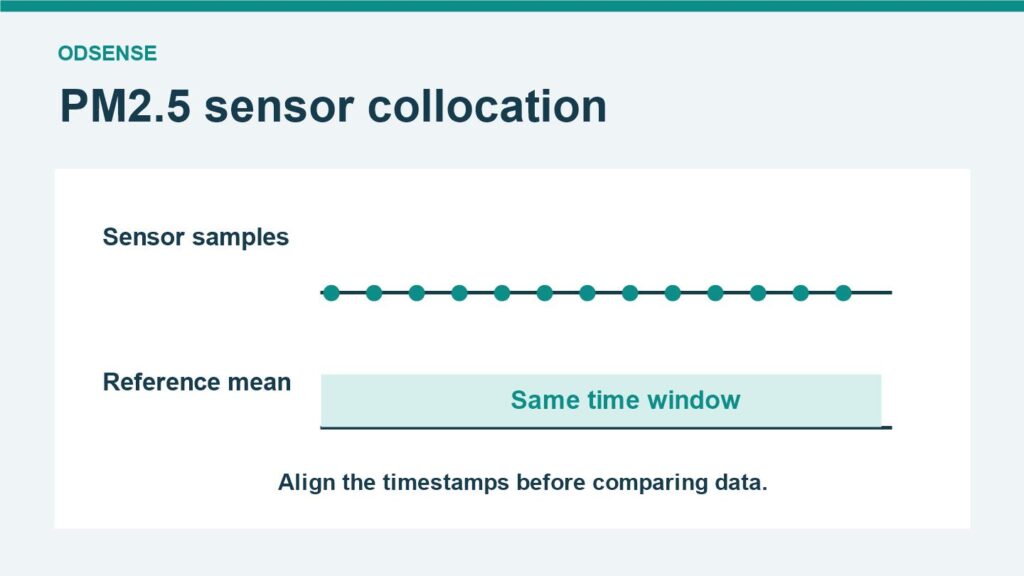
PM2.5 sensor collocation means operating a sensor and a reference monitor together so they sample comparable air at the same time. Check siting, time coverage, and the averaging period before calculating bias. Otherwise, the comparison can reflect different air or different hours instead of instrument performance.
Define the purpose of PM2.5 sensor collocation
Choose whether the objective is to compare several sensors, quantify their difference from a reference, or evaluate a correction. A second low-cost sensor can show whether two units agree. Establishing accuracy requires an appropriate reference. The US EPA collocation guide explains what a side-by-side test can reveal.
Make the air at the inlets comparable
Document inlet height, separation, shielding, and nearby sources. A wall, exhaust outlet, or obstruction can expose one instrument to a different concentration. Work with the reference site's operator and follow its siting requirements. For particle size and reporting units, see the PM2.5 measurement guide.
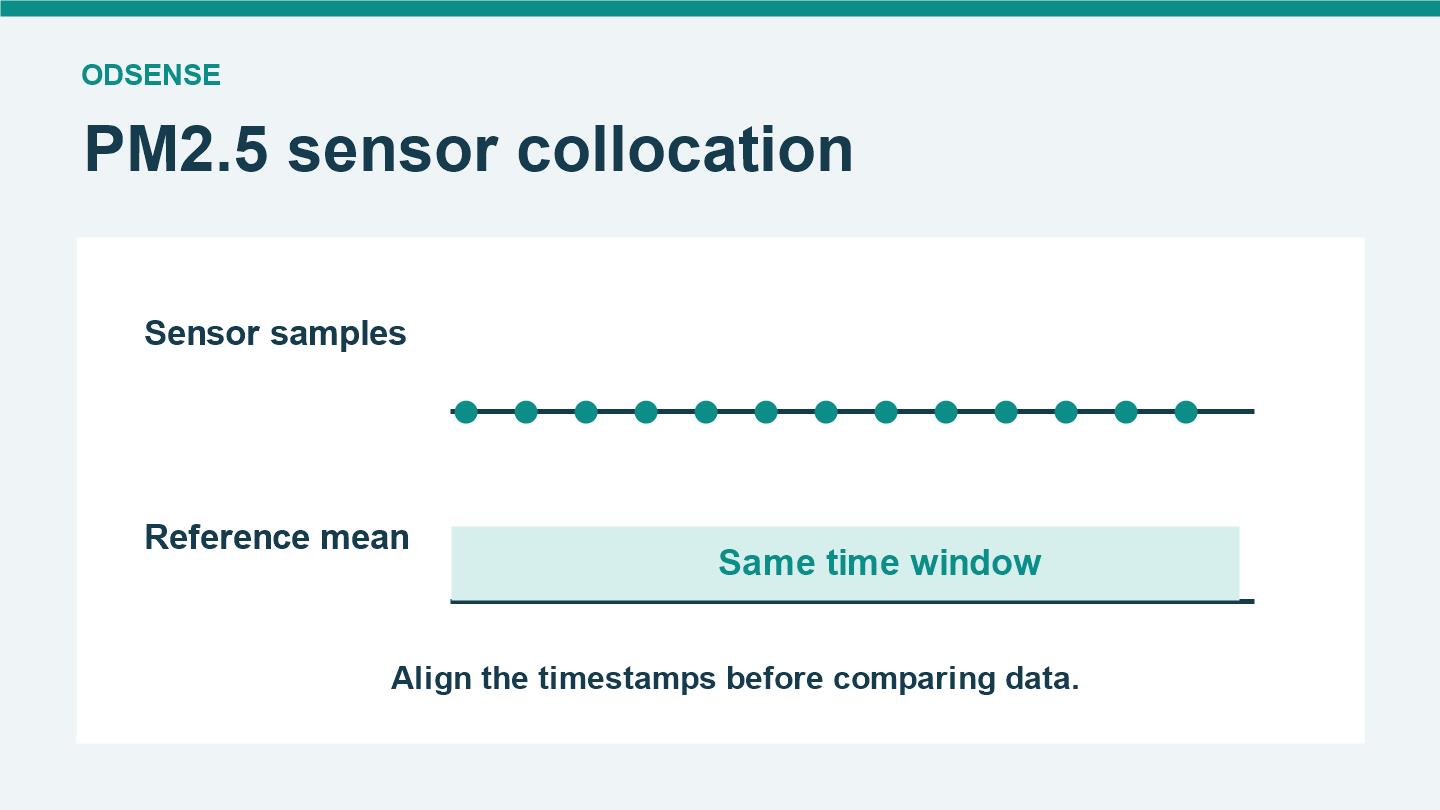
Match time windows before comparing values
If reference readings are hourly and the sensor logs once a minute, aggregate the sensor records over each matching hour. Verify the time zone and whether the hourly timestamp marks the start or end of that hour. Apply a documented completeness requirement to both data sets and count the paired hours that pass. See the guide to selecting a logger interval for the distinction between sampling and reporting.
Check the size and direction of the differences
For each valid pair, subtract the reference value from the sensor value. A positive mean difference indicates higher sensor readings on average. Also inspect absolute differences and the scatter plot. High correlation can coexist with a systematic offset. The EPA PM2.5 sensor testing protocol distinguishes bias, error, and linearity for supplemental outdoor monitoring.
Test a correction on separate data
If fitting a correction, hold out a later period or an independent site and check whether it improves the comparison there. Examine performance at different concentration and humidity ranges. Barkjohn and colleagues’ PurpleAir study evaluated a correction for specific devices and data. Keep the original readings and document the correction, its inputs, and the conditions tested.
Record conditions that may affect interpretation
Save reference and sensor model details, firmware, start and end times, data gaps, inlet photos, and temperature and humidity readings. Mark maintenance and any changes in surroundings. Moist conditions can influence optical measurements as described in the guide to PM2.5 humidity effects. If the study covers only a narrow range of conditions, report that limit with the result.
Frequently asked questions
Can I compare my sensor with a station across town?
It can help you compare broad trends. A collocation uses instruments sampling comparable air at the same time, which a distant station may not provide.
Should I fill missing hours before calculating bias?
Calculate the comparison on valid matched pairs and report how many hours were missing or excluded. If an application needs estimated values later, identify those estimates separately.