
pH Electrode Slope and Offset: Read the Calibration Record
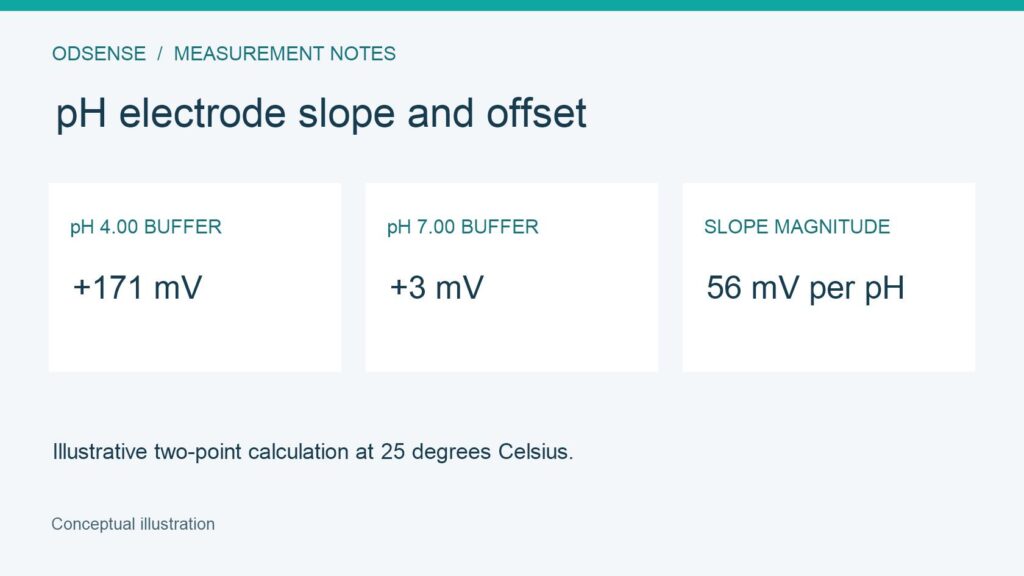
pH electrode slope and offset describe different parts of the calibration result. Slope is the change in electrode voltage per pH unit. Offset describes where the calibration curve sits relative to the instrument’s reference. Read both values together with the buffer temperatures, raw millivolts and verification result before deciding whether the electrode needs service.
Read the slope in the units the meter uses
Some meters show millivolts per pH unit. Others report the magnitude as a percentage of the theoretical response at the calibration temperature. On a typical glass electrode, voltage falls as pH rises. A meter may display a positive slope percentage even when the voltage change is negative. Check the convention in the instrument manual.
The Thermo Fisher pH measurement handbook describes slope and offset checks. See the pH sensor guide for the glass electrode and reference assembly.
Check what the instrument calls offset or zero
One instrument may report the voltage at a stated pH reference. Another may report the pH at which the voltage crosses zero. The Yokogawa pH and ORP operating manual shows how its zero value relates to the calibration curve. Record the units and reference before comparing values from different instruments.
Calculate the slope from two stable readings
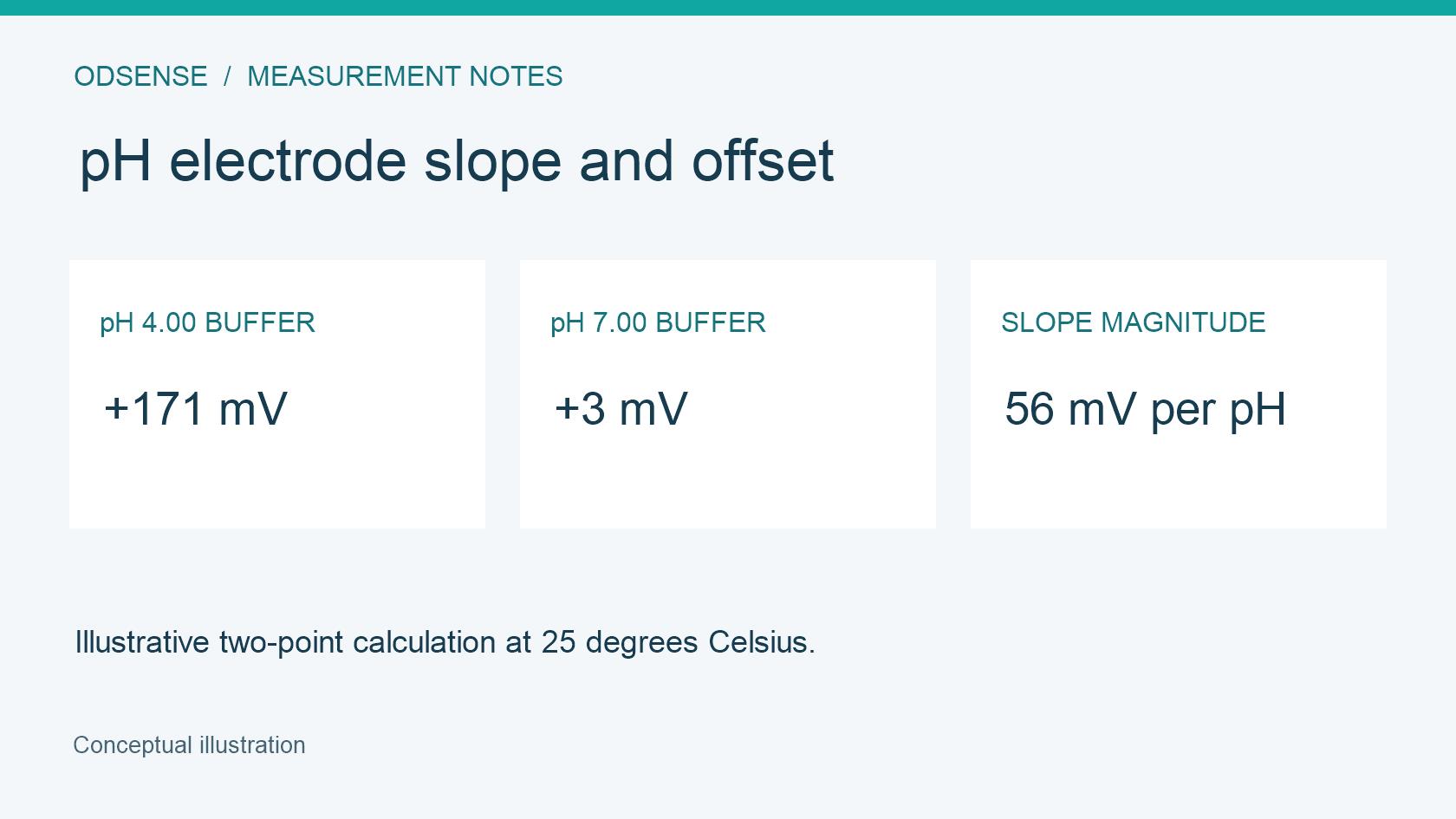
As an illustration, suppose the buffers are pH 4.00 and 7.00 at 25 °C. If the observed voltages are +171 mV and +3 mV, their separation is 168 mV across 3 pH units. The slope magnitude is 56 mV per pH unit, about 95% of the theoretical response at this temperature. For a meter that reports the electrode voltage at pH 7, the offset in this example is +3 mV. These figures illustrate the calculation. Acceptance depends on the instrument and method.
Check buffers and temperature before changing the probe
Confirm the selected buffer table and the buffer values at their actual temperature. Use clean aliquots and allow each reading to stabilize. Check that the temperature channel responds correctly. Temperature compensation for the electrode response does not predict how the pH of a process sample changes with temperature. Use the pH calibration checklist to review the setup.
Compare the pattern with earlier records
If the buffer readings move by similar millivolt amounts, the offset can change while their separation stays similar. If the separation shrinks, the slope changes. Contaminated buffers, carryover, slow stabilization and electrode condition can all affect these patterns. The Yokogawa PH202 calibration guidance explains how that instrument records both parameters.
Verify the result before returning to service
Check a suitable buffer that was not used to fit the curve, when the measurement procedure calls for it. Save readings before and after service, including buffer lot, temperature and stabilization behavior. If the result remains outside the applicable limits, use the instrument’s maintenance instructions. Consult the pH electrode storage guide if the probe has been stored or allowed to dry.
Frequently asked questions
Can one buffer determine slope? A single point can verify one response or support a zero adjustment. Determining slope requires at least two distinct reference points.
Does a high slope percentage prove a good calibration? Check the offset, stability and independent verification as well.