
ORP and pH: Why ORP Changes at the Same Free Chlorine
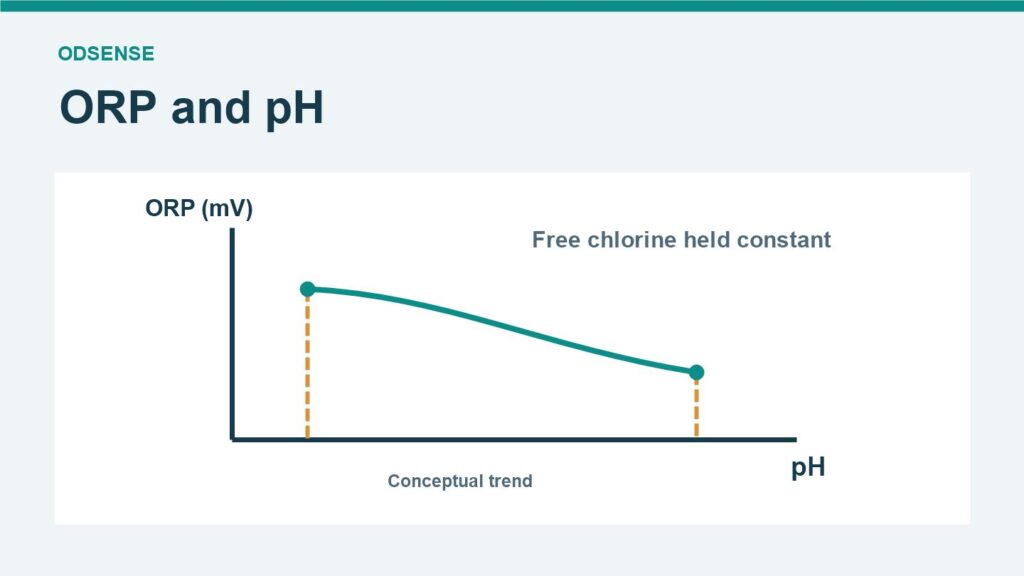
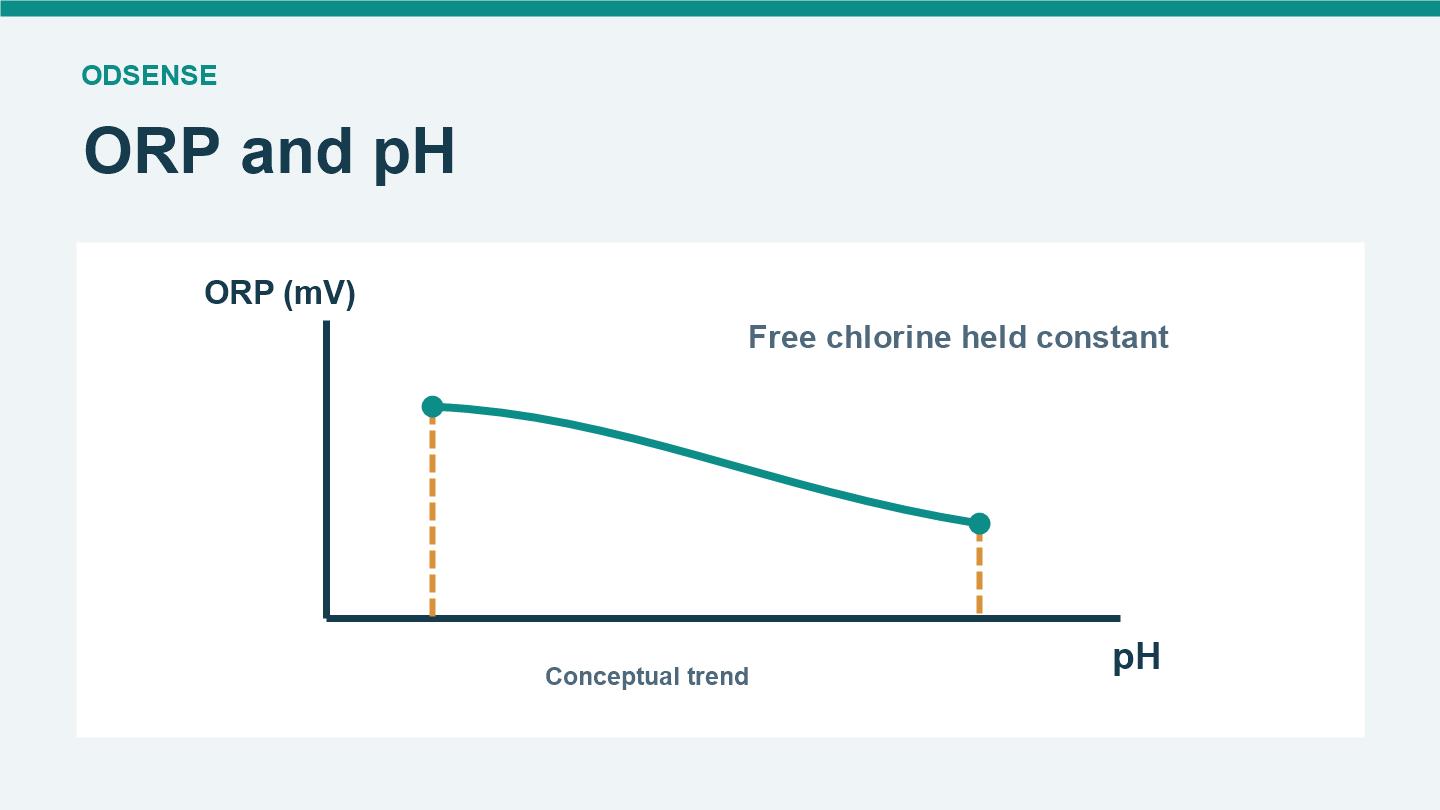
ORP and pH should be read together when interpreting a change in chlorinated water. At a similar free chlorine concentration, a rise in pH can reduce the fraction present as hypochlorous acid and lower the ORP reading. Collect measurements from the same point and time before deciding which change explains the trend.
What the ORP probe measures
Oxidation-reduction potential is a voltage in millivolts measured relative to a reference electrode. The value reflects the combined effect of reactions occurring at the sensing surface. Free chlorine is a separate concentration measurement, typically reported in mg/L. See the guide to interpreting ORP in water for the difference between a trend and a concentration.
Why similar free chlorine can produce different millivolts
In typical chlorinated water, free chlorine includes hypochlorous acid and hypochlorite. As pH rises, the balance shifts toward hypochlorite. Health Canada's guidance on water monitoring discusses measured changes in ORP with pH and disinfectant type. Use the relationship to interpret paired observations. A fixed conversion from millivolts to free chlorine cannot represent changing water chemistry.
Take a matched set of readings
Record the time, sampling point, pH, ORP, temperature, and independently measured free chlorine. Record the disinfectant type and the condition of the sample flow. Check the pH analyzer against its normal verification procedure. The pH sensor calibration checklist covers buffer condition and stabilization.
Account for delay in the sample line
An inline ORP probe and a handheld chlorine test may represent different water if the sample points differ or the analyzer is fed through a long line. Check when the changed water first reached each instrument. Mark flow interruptions, maintenance, and sample-point changes on the trend. Compare stable periods as well as transitions.
Check the sensing surface and reference
If ORP drifts while the paired measurements and process stay steady, check for deposits, restricted sample flow, and an aging reference. Use the standard, expected voltage at its temperature, and stabilization procedure specified for the model. The YSI ORP electrode manual illustrates why reference system and temperature matter. Record the readings before and after service. Consult the electrode storage guide for compatible handling of combination probes.
Interpret ORP trends within the same process
Build a reference trend from periods with comparable flow, pH, temperature, and disinfectant type. The US EPA technical guidance describes several factors that can affect ORP, including the disinfectant and dissolved oxygen. When comparing two instruments, record whether both report voltage against the same reference convention. Use the prescribed residual test for decisions that require free chlorine concentration.
Frequently asked questions
Is there a universal pH correction for an ORP reading?
An empirical relationship may describe one process over a limited range. Different oxidants, sample conditions, and reference systems can produce a different relationship.
What if both pH and ORP change after probe maintenance?
Check the reference and connections if the two measurements share a combination probe. Verify each channel independently before using the changed readings to interpret the process.