
Indoor Outdoor CO2 Difference: Compare Readings in Context
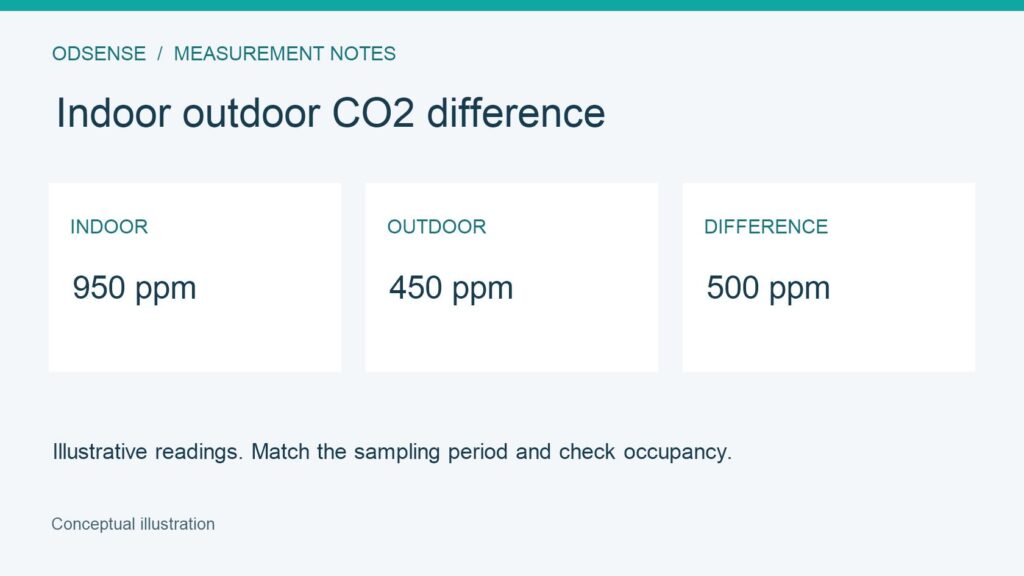
The indoor outdoor CO2 difference is the indoor concentration minus the outdoor concentration at a comparable time. It helps show how much higher the indoor concentration is than the incoming background. Interpret that difference together with occupancy, room mixing and ventilation operation.
Calculate the difference using the same units
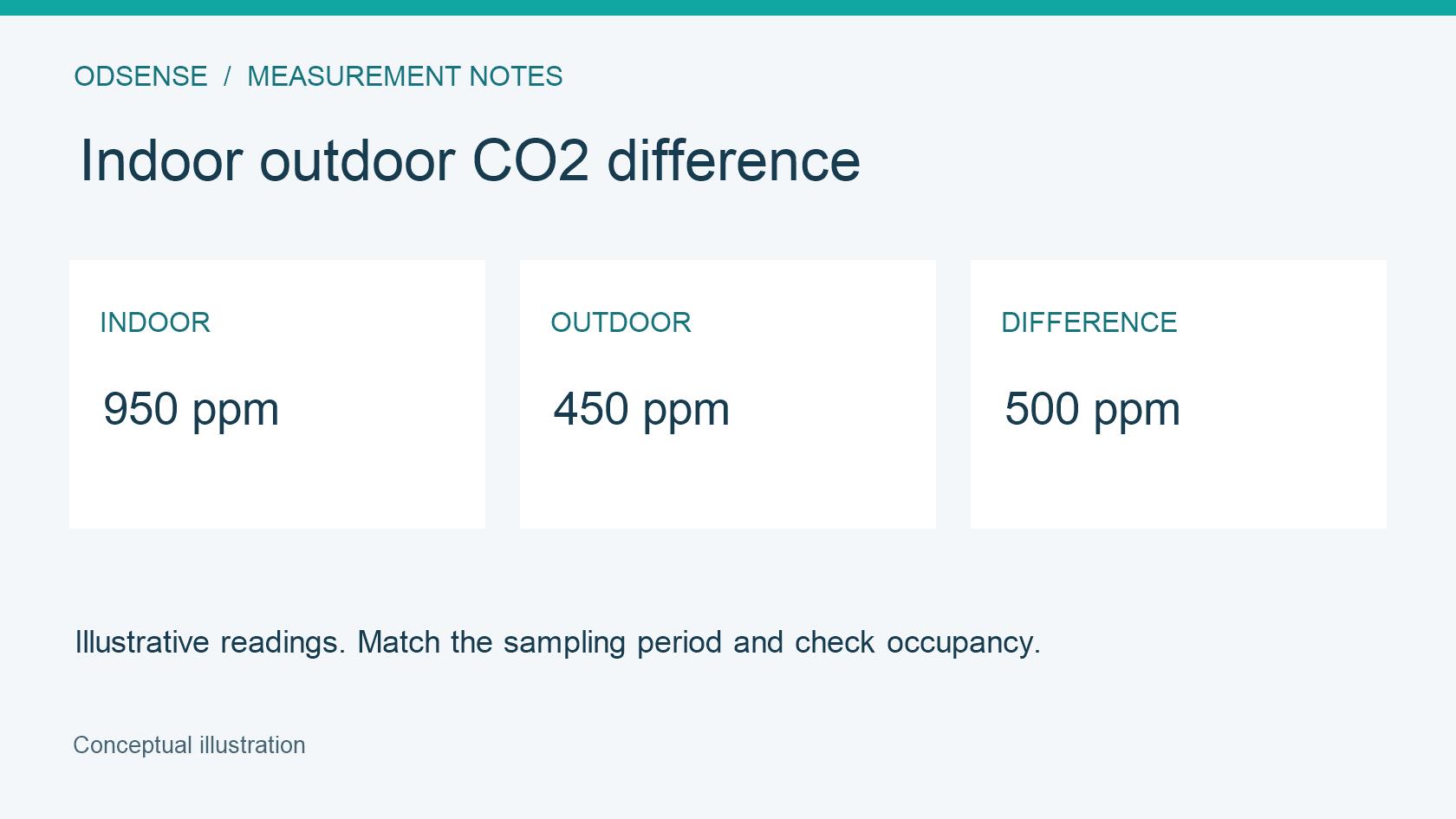
If an indoor sensor reads 950 ppm and an outdoor sensor reads 450 ppm, the difference is 500 ppm. These are illustrative readings. Retain both original values, because a difference alone hides whether the outdoor background or the indoor concentration changed.
The NIST indoor carbon dioxide technical note describes how outdoor concentration, generation within the space and ventilation contribute to the indoor result.
Find an outdoor reference that represents incoming air
For a mechanical system, choose a sampling location that represents the relevant outdoor air intake. Note nearby exhaust outlets or other local sources that may influence the reading. For naturally ventilated rooms, document the openings in use and the placement of the outdoor instrument. Consider whether one reference represents all zones.
Match the indoor and outdoor records
Align clocks, time zones and averaging intervals. A brief indoor peak and a daily outdoor average describe different periods. Check sensor ranges and configurations and compare the instruments side by side under a common condition when the manufacturer allows it. Use the NDIR CO2 placement guide to avoid points dominated by local exhalation or supply air.
Add occupancy and equipment context
Log when people enter and leave, changes in room use and the HVAC operating mode. The concentration typically takes time to respond to those changes. For example, a rising trend after a meeting begins can reflect more people as well as changes in the outdoor air supply. NIST’s sensitivity analysis illustrates why generation and ventilation assumptions matter.
Check whether a steady-state interpretation applies
A steady-state estimate assumes a reasonably mixed zone and stable generation, outdoor concentration and ventilation. Compare traces under repeatable operating conditions and confirm that a plateau has actually developed before using that assumption. See the NIST uncertainty study for the assumptions behind that comparison.
Record the baseline convention and follow up
Save the indoor and outdoor channels together with the difference and the equipment state. If a sensor uses automatic baseline correction, confirm it suits the location and occupancy schedule using the CO2 baseline calibration guide. If a pattern persists under matched conditions, compare it with measured system operation or an appropriate ventilation assessment. The office monitoring plan shows how CO2 fits into a broader measurement program.
Frequently asked questions
Can I subtract a fixed outdoor value? A documented assumption can support an estimate. Use a representative measurement when local variation matters to the decision.
Does the difference measure fresh-air flow directly? The difference also depends on sources, mixing and time since occupancy changed. Record those conditions and verify airflow separately when the decision requires it.