
EC to TDS Conversion: Choose a Factor for the Water You Measure
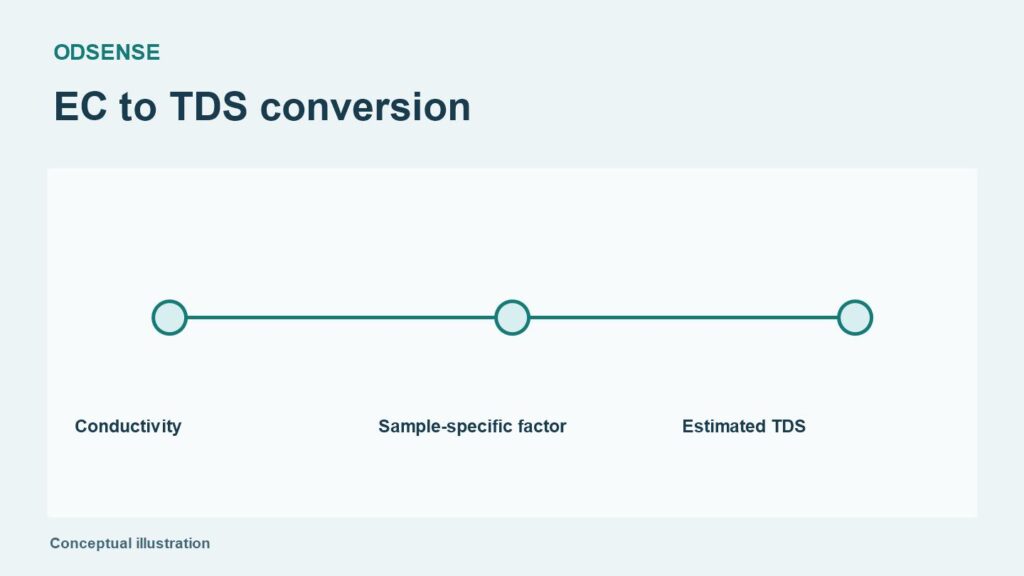
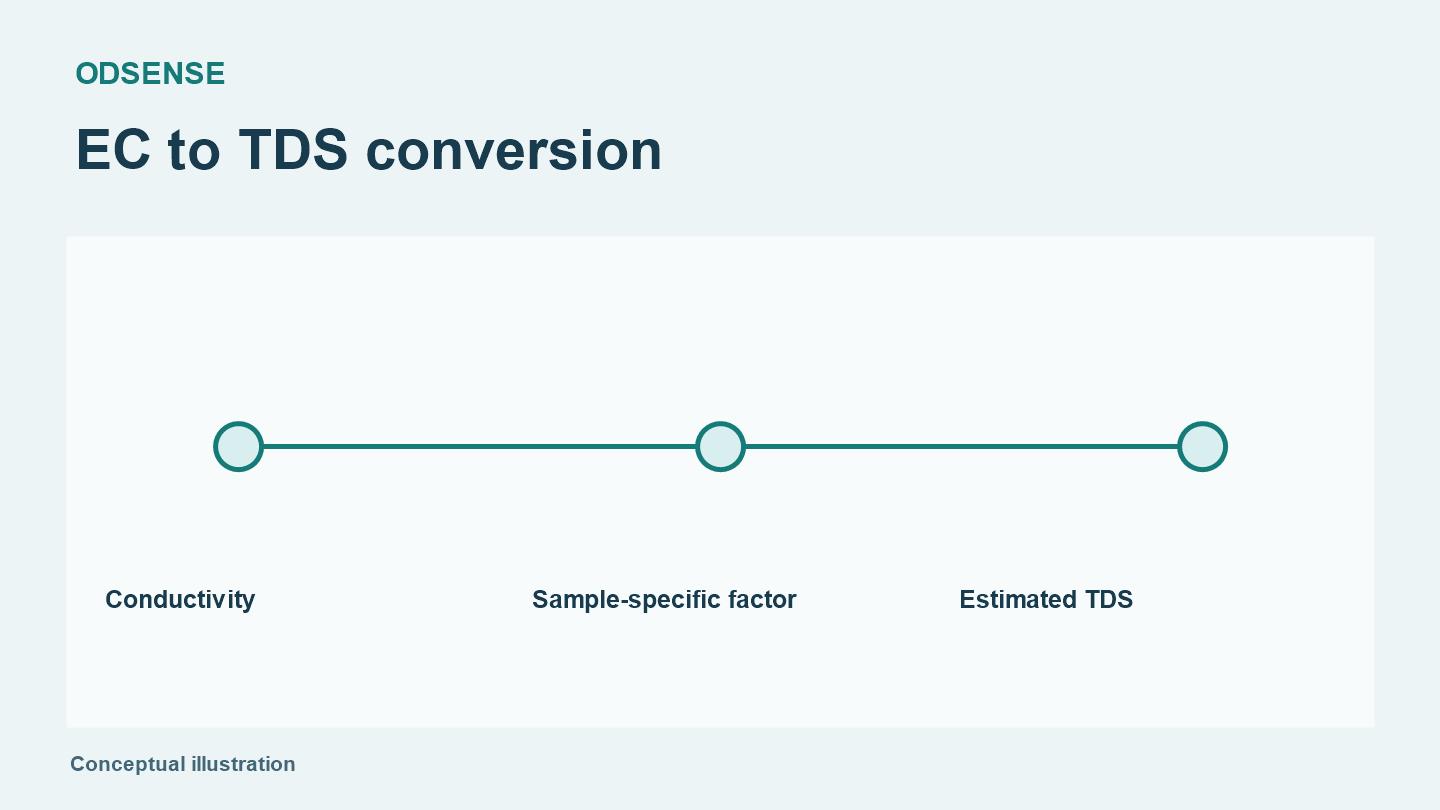
EC to TDS conversion estimates dissolved solids from electrical conductivity using a factor. For example, at 500 µS/cm, a factor of 0.60 gives an estimated 300 mg/L. A different factor gives a different result, even if both meters measured the same conductivity.
Understand what conductivity measures
Conductivity reflects how readily the ions in the sample carry electrical current. An estimate of total dissolved solids depends on the mixture of ions, and some dissolved substances contribute little conductivity. USGS guidance on dissolved-solids estimation describes a factor determined for the water under study. See the water conductivity measurement guide for the underlying measurement.
Compare the units and reference temperature
Confirm whether EC is shown in µS/cm or mS/cm. A reading of 0.50 mS/cm is 500 µS/cm. A factor expressed in mg/L per µS/cm must be used with the latter number. Confirm whether the meter displays raw conductivity or specific conductance referenced to 25 °C, and use the basis required by the factor. See the conductivity temperature compensation guide.
Establish a factor with matched samples
For trend monitoring, take paired EC and independent laboratory TDS measurements from the same samples across the expected operating range. Check the resulting ratios and investigate if they change with source water, treatment, or blending. Validate any chosen factor on additional samples. A calibration standard can verify conductivity performance. The relationship between conductivity and TDS in the process still requires evidence from that process.
Keep EC and estimated TDS in the record
Record measured EC, temperature, reference temperature, the selected factor, and the estimated TDS. When comparing data from multiple meters, check the formula and the convention behind labels such as ppm. A conversion designed for saltwater salinity answers a different question. The conductivity and salinity comparison explains that distinction.
Frequently asked questions
Why does the TDS display change after replacing a meter?
Compare EC before comparing TDS. If EC agrees on the same sample and temperature basis, check the conversion factor and the units on both displays.
Can a TDS estimate replace the specified laboratory method?
Use the method required by the monitoring program when a direct determination is specified. Keep conductivity-based estimates labeled as estimates.