
Conductivity Temperature Compensation: Comparing Water Sensor Readings
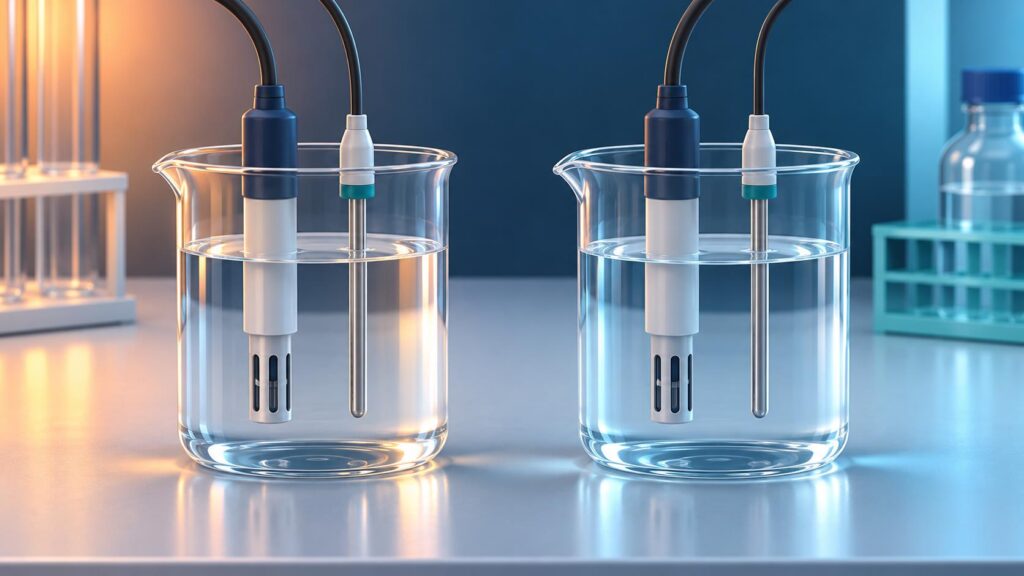
Conductivity temperature compensation converts a reading at the sample temperature to an estimated value at a specified reference temperature. It helps compare measurements taken under different thermal conditions. Before recalibrating two instruments that disagree, check whether they report uncompensated conductivity or a temperature-referenced value and whether their compensation settings match.
This guide is for water-monitoring teams, system integrators and buyers comparing electrical conductivity instruments. The aim is a traceable comparison, not a universal correction factor. The correct approach depends on the sample, instrument and measurement method.
Identify what each display actually reports
Electrical conductivity changes with temperature because the electrical behaviour of the solution changes. A raw reading at the current sample temperature and a value corrected to a reference temperature answer different reporting questions. A reference of 25 degrees Celsius is common, but the project or method may use another basis.
Check the transmitter, handheld meter and data platform separately. A dashboard label saying only EC may hide a conversion performed upstream. Record the unit as well: millisiemens per centimetre and microsiemens per centimetre are not interchangeable numbers. Our water conductivity introduction explains what the underlying measurement does and does not represent.
Compare the compensation method and its assumptions
Instruments may use a linear temperature coefficient, a predefined solution model or another documented method. A coefficient appropriate for one solution should not automatically be applied to another. Confirm the selected algorithm, reference temperature, coefficient and any permitted operating range before comparing readings.
Manufacturer examples are implementation-specific. Vernier documents a defined coefficient and temperature limits for one probe; Hamilton explains why pure-water temperature behaviour requires particular attention. These examples demonstrate the need to read the exact device instructions. They do not establish that every ODSENSE model uses either approach or supports every selectable compensation mode.
Check the temperature measurement at the sensing point
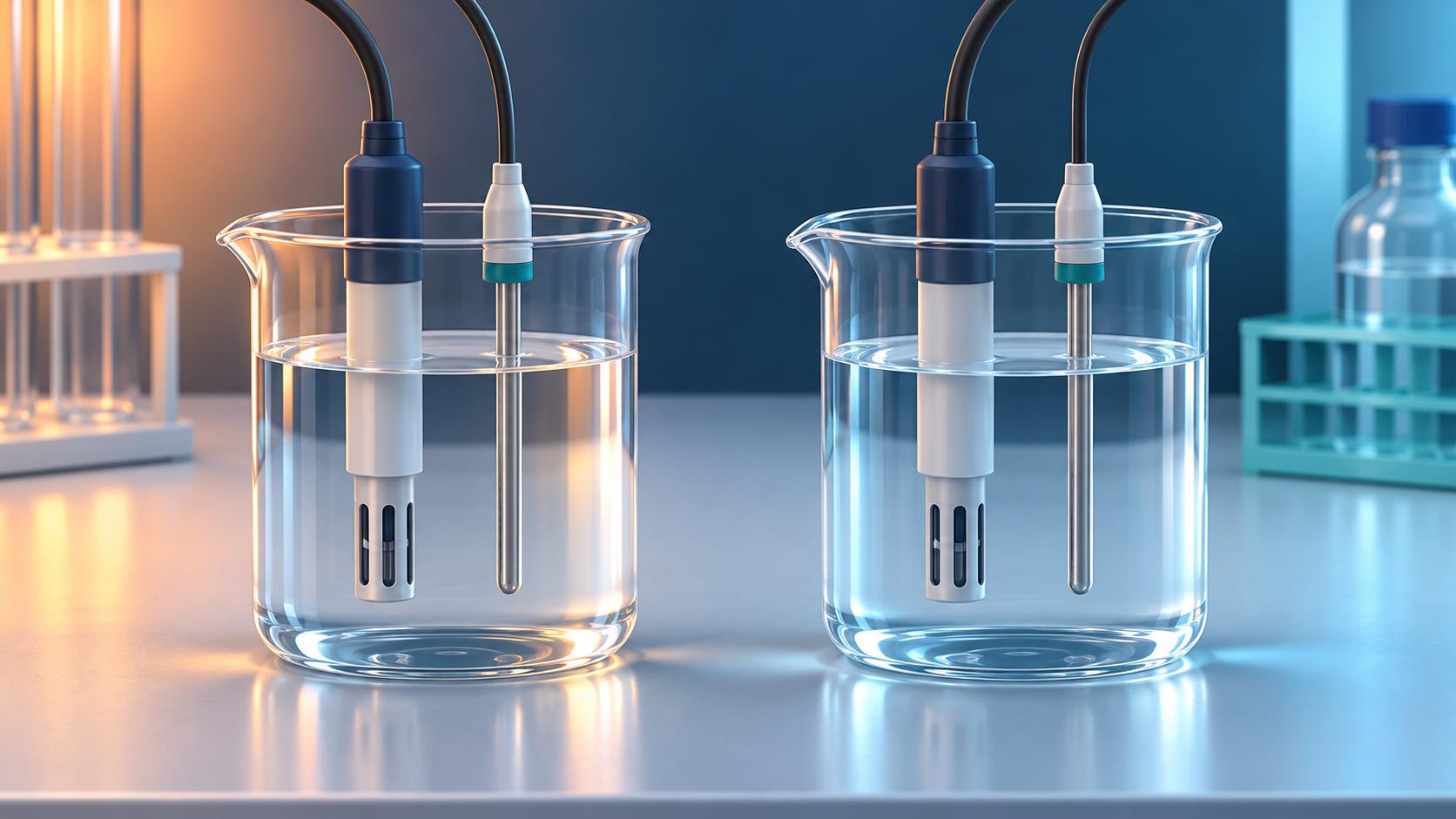
Compensation depends on temperature information that represents the same liquid as the conductivity measurement. Confirm where the temperature element is located and whether an external probe, if used, samples equivalent conditions. A hot process line and a cooling sample cup can produce different comparison conditions even when the water originated from the same source.
Allow the instrument and sample to stabilize according to the applicable procedure. Record the observed temperature rather than relying on a room thermostat. Avoid changing compensation settings to force agreement while the temperature is still moving. If the temperature channel itself is suspect, investigate it before evaluating the corrected conductivity.
Keep sample handling separate from instrument settings
Use a comparison plan that identifies the sample, collection time, containers, measurement order and temperature. Keep the conductivity cell clean and correctly immersed under the manufacturer's instructions. Check for trapped bubbles, contamination and unsuitable flow or positioning. Changing sample handling at the same time as calibration makes the result difficult to interpret.
For low-conductivity water, exposure and contamination can be especially important. Choose an arrangement suited to the measurement requirement rather than assuming that an open beaker reproduces an installed flow cell. Discuss the medium, expected range and installation on the water quality sensor page before choosing the final assembly.
Verify first, then decide whether calibration is needed
Begin by documenting both instruments' settings and results without changing them. Compare the measurement basis, sample temperature, compensation mode and units. Follow the manufacturer's procedure for checking the instrument with a suitable standard, including how the standard's temperature-dependent value is handled.
Do not confuse calibration with temperature compensation. Calibration establishes the instrument response against a reference; compensation applies a model to report a value on another temperature basis. A wrong compensation model is not necessarily corrected by adjusting the cell constant. Investigate each step separately and retain the original observations.
Build an acceptance record for the complete system
Record raw conductivity if available, temperature, compensated conductivity, reference temperature, algorithm, coefficient, sensor identifier and software configuration. Verify that the receiving application does not apply compensation a second time. Keep these details with the acceptance criteria and the uncertainty or tolerance required by the project.
Conductivity also remains distinct from a complete composition or water-safety analysis. If the project converts conductivity to salinity, verify the additional assumptions described in our conductivity-to-salinity guide rather than treating every conversion as a universal factor.
Frequently asked questions
Is one temperature coefficient suitable for every water sample?
No. Select the method using the sample and instrument documentation. Pure water, natural water and process solutions may need different treatment.
Should compensation always be enabled?
Use the reporting basis required by the application or method. Some comparisons require the actual-temperature value. Record the setting so that another team can reproduce the result.
Sources: USDA conductivity and temperature explanation, Hamilton pure-water conductivity guidance, Vernier compensation example and limits.