
Radar vs Ultrasonic Level Sensors: How to Choose for a Tank
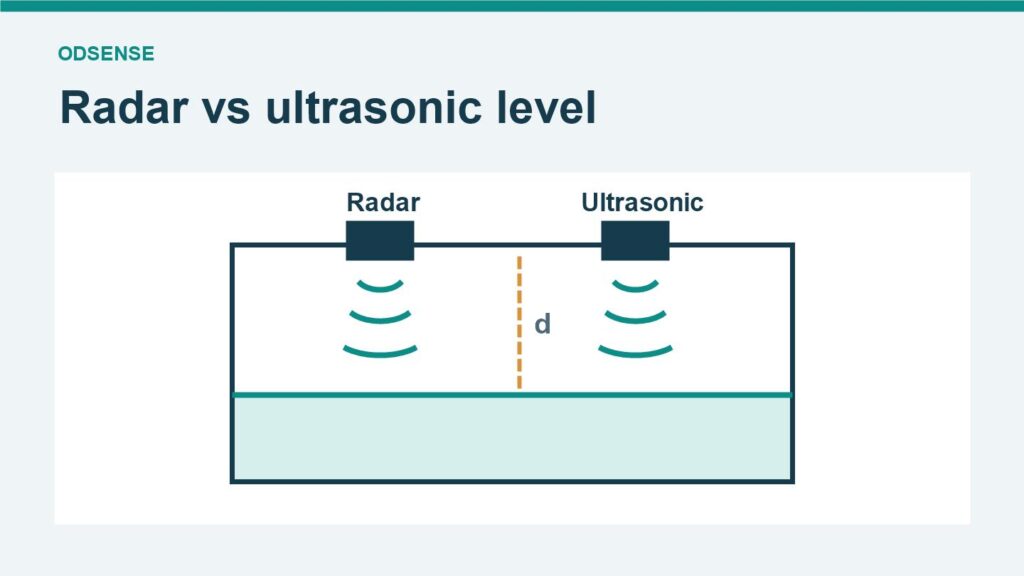
When comparing radar vs ultrasonic level sensors, start with the space above the liquid and the path from the nozzle to the surface. Ultrasonic is a candidate for a calm water tank with a clear acoustic path. If steam or a changing vapor layer disrupts that path, evaluate non-contact radar first. Test the echo in the real vessel before committing to either technology.
How both sensors calculate tank level
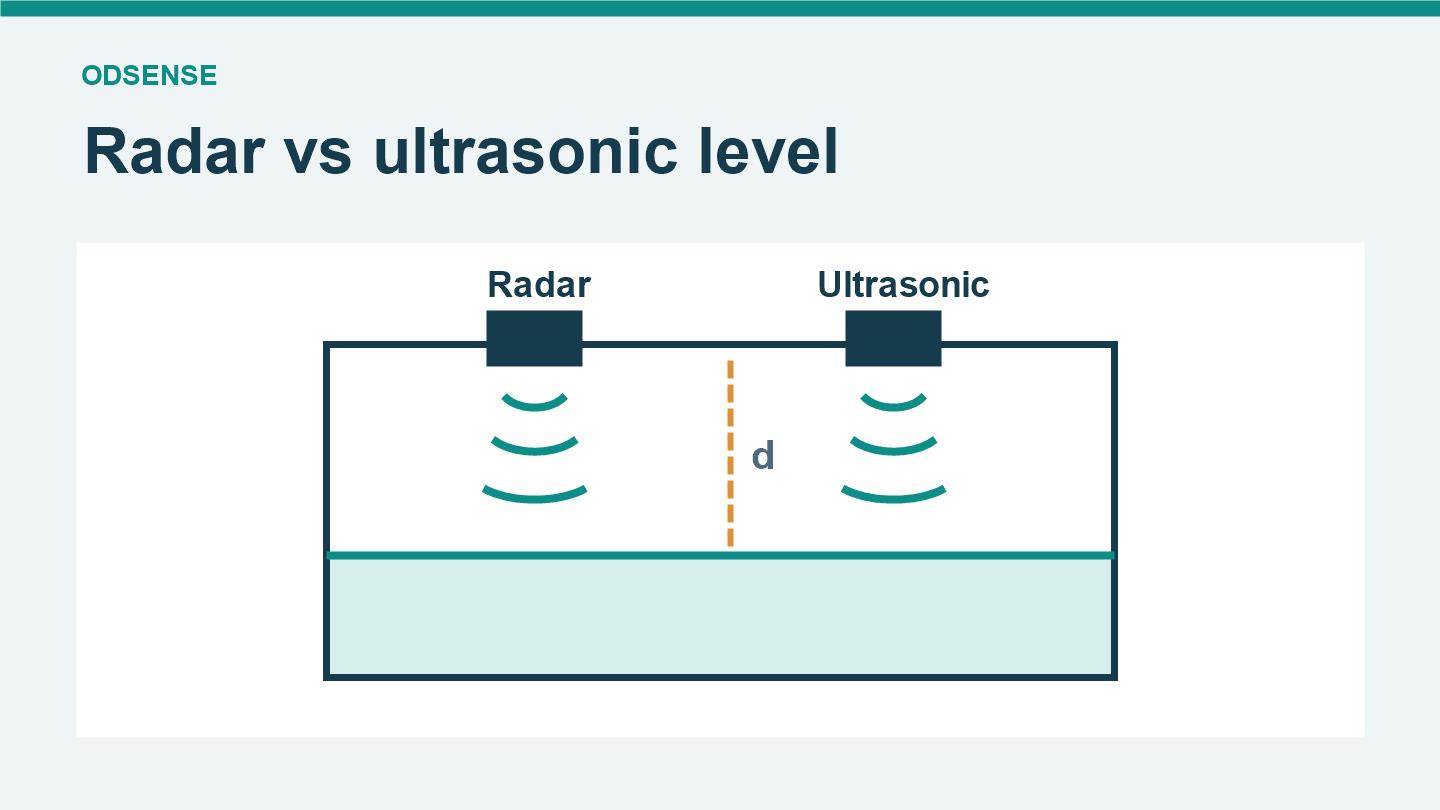
An ultrasonic transmitter measures the time for a sound pulse to travel to the surface and back. Non-contact radar uses a microwave signal. Both report distance from a sensor reference point and use the configured tank dimensions to report level. Check the difference between the measured distance, the displayed level, and the usable volume in the water level sensor selection guide.
How vapor changes the comparison
Sound speed depends on the gas and its temperature. Local temperature compensation can help in ordinary air, but it cannot fully represent a strong temperature gradient or varying gas composition along the whole path. The Emerson level measurement guide discusses applications with steam and layered vapor. For radar, also check the antenna material, process rating, and potential for deposits.
Decide which surface the instrument should track
Define whether the reading should represent liquid beneath the foam or the top of the foam. Both acoustic and radar signals can weaken in foam. The detector may also follow a different echo as the foam changes. VEGA's technology comparison describes the effects of foam and openings. Test during normal production and during the condition that produces the most foam.
Measure the nozzle and the clear path
Record the nozzle's inside diameter and length, the mounting position, the closest operating distance, and the tank internals. Compare these with the candidate model's nozzle limits, beam angle, and minimum measuring distance. A narrow beam can help avoid obstacles, but metal near the antenna may still create an unwanted echo. The ultrasonic installation guide explains how to check the acoustic path before mounting.
Commission at several operating levels
Compare the transmitter with an independent reference at low, middle, and high levels. Include filling or agitation if it affects the echo. Record the displayed distance, derived level, and any echo diagnostics available on the instrument. Note whether the reading freezes on signal loss and how the downstream system flags that condition. Use the same distance reference for all comparisons.
Consider a different measuring principle if the echo stays weak
The Endress+Hauser overview of continuous level measurement describes guided-wave radar and pressure-based alternatives. A pressure transmitter can work when a clear overhead path is unavailable. Its conversion from pressure to level depends on liquid density and the pressure reference, as explained in the hydrostatic level measurement guide.
Frequently asked questions
Can radar reuse an ultrasonic transmitter's nozzle?
Sometimes. Check the radar antenna's mounting and clearance requirements against the actual nozzle. Confirm that the instrument can track the surface at the highest intended level.
Why does a transmitter jump to a fixed distance?
One possibility is that the instrument has selected an echo from a fixed structure in the tank. Compare the reported distance with the position of the nozzle, wall, or internal equipment and review the echo diagnostics.