
Water Level Sensor Types for Tanks and Open Water
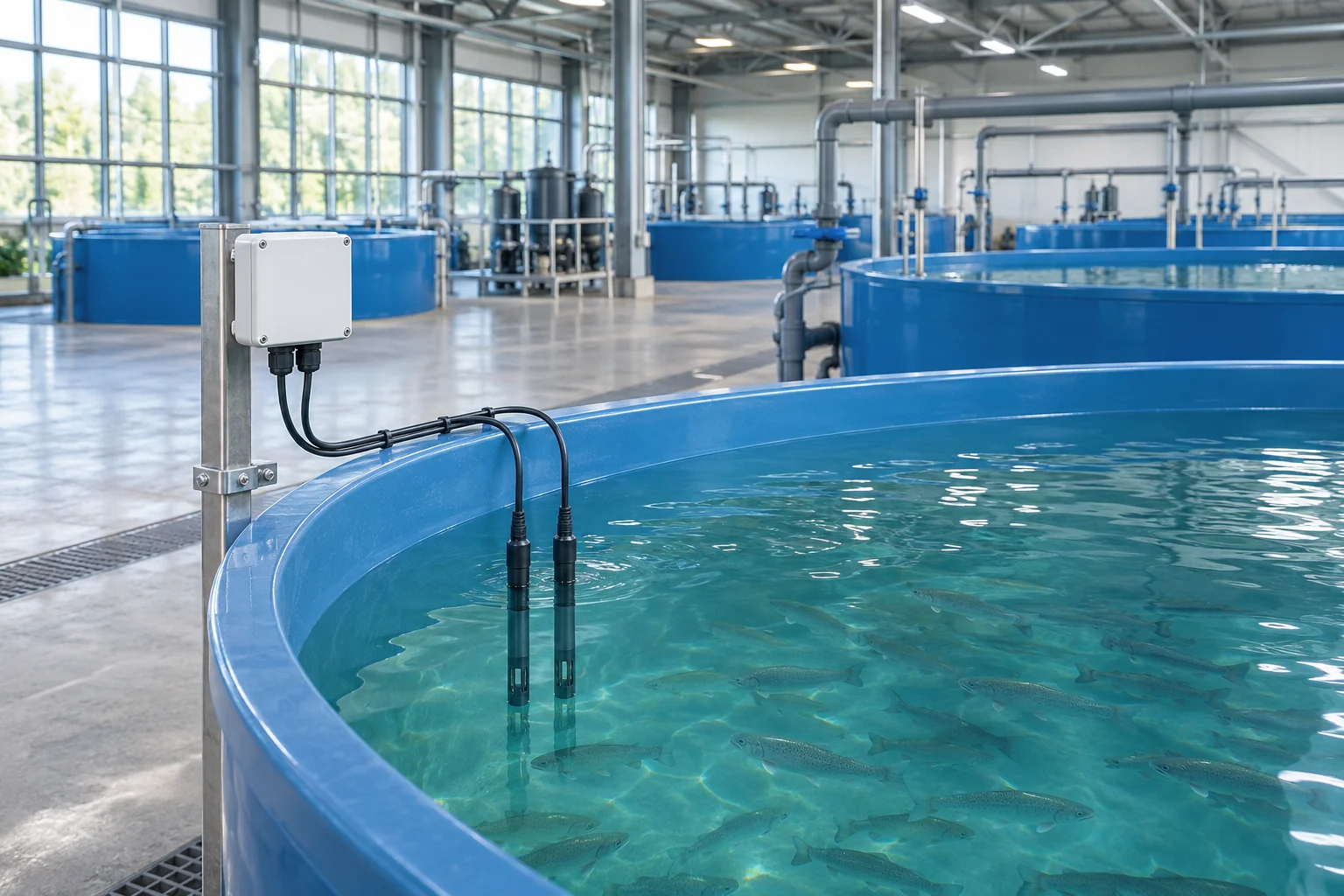
A water level sensor should be selected for the vessel or open-water arrangement and the quantity required. Point-level indication and continuous level measurement are different tasks. Identify the reference point and installation constraints before comparing sensing principles or output options.
Define level separately from volume
A level reading describes a position relative to a defined reference. A volume result requires an applicable relationship with the container geometry or a documented calibration. Do not assume that a level channel automatically provides a valid volume for any tank shape.
| Approach | Question for the application |
|---|---|
| Point-level indication | Which state or level event must be detected? |
| Hydrostatic measurement | What fluid properties and pressure reference apply? |
| Ultrasonic measurement | What surface and installation conditions must be reviewed? |
| Radar measurement | What geometry and operating conditions does the proposed model support? |
| Derived volume | What documented geometry or calibration converts the result? |
Describe the actual measuring environment
Provide drawings, dimensions and the intended measuring region. Record obstructions, surface behavior, mounting access and conditions that could affect the proposed method. Ask the supplier to state the applicable limits for the specific assembly rather than assigning generic strengths to every product using that principle.
For an immersed instrument, confirm its installation and permitted exposure from the selected manual. For a non-contact arrangement, review the complete measurement path and mounting instructions. The broad label non-contact does not remove installation requirements.
Make the output and reference unambiguous
Document the zero reference, direction, units and data mapping. If the receiving system calculates volume or another quantity, identify the method and required inputs. Keep original level data available so a geometry-setting error can be distinguished from a sensor problem.
Where alarms or process actions are included, specify their logic and failure behavior separately. A level signal alone does not establish a complete overflow-protection or control system. Accept those functions only against the defined system requirements.
Agree acceptance checks before installation
- Confirm the model, reference point and installation drawing.
- Check documented values at suitable agreed conditions.
- Verify units and scaling at the receiving system.
- Test how missing or invalid data is represented.
- Retain configuration and maintenance responsibilities.
Use the industrial sensor category with the water quality measurement category to prepare the measurement requirements. Confirm the specific device model, fitted options and applicable documents before ordering.
Frequently asked questions
Is level the same as water quality?
No. Level and chemical or physical water-quality measurements address different quantities.
Can any level sensor measure tank volume directly?
Confirm a valid geometry or calibration relationship and whether the specific configuration supplies that derived output.