
Pressure Dew Point in Compressed Air: Compare Readings at the Same Pressure
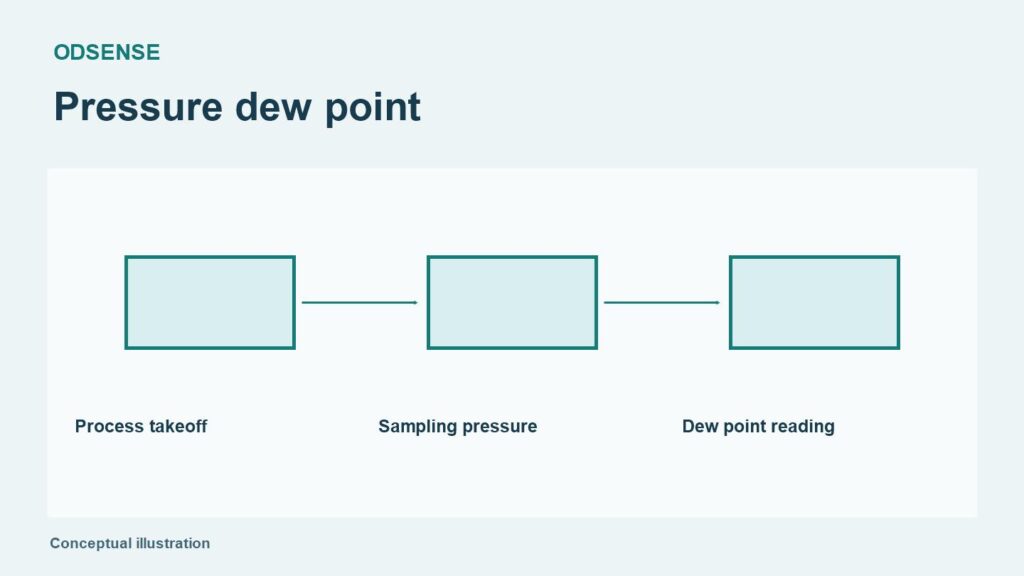
Pressure dew point is the saturation temperature of the gas at its measurement pressure. Compressed air can have one dew point inside the line and a lower dew point after expansion to atmospheric pressure, even when the water vapor fraction is unchanged. Check the sample pressure before judging the dryer or comparing the reading with a specification.
Identify where pressure is reduced
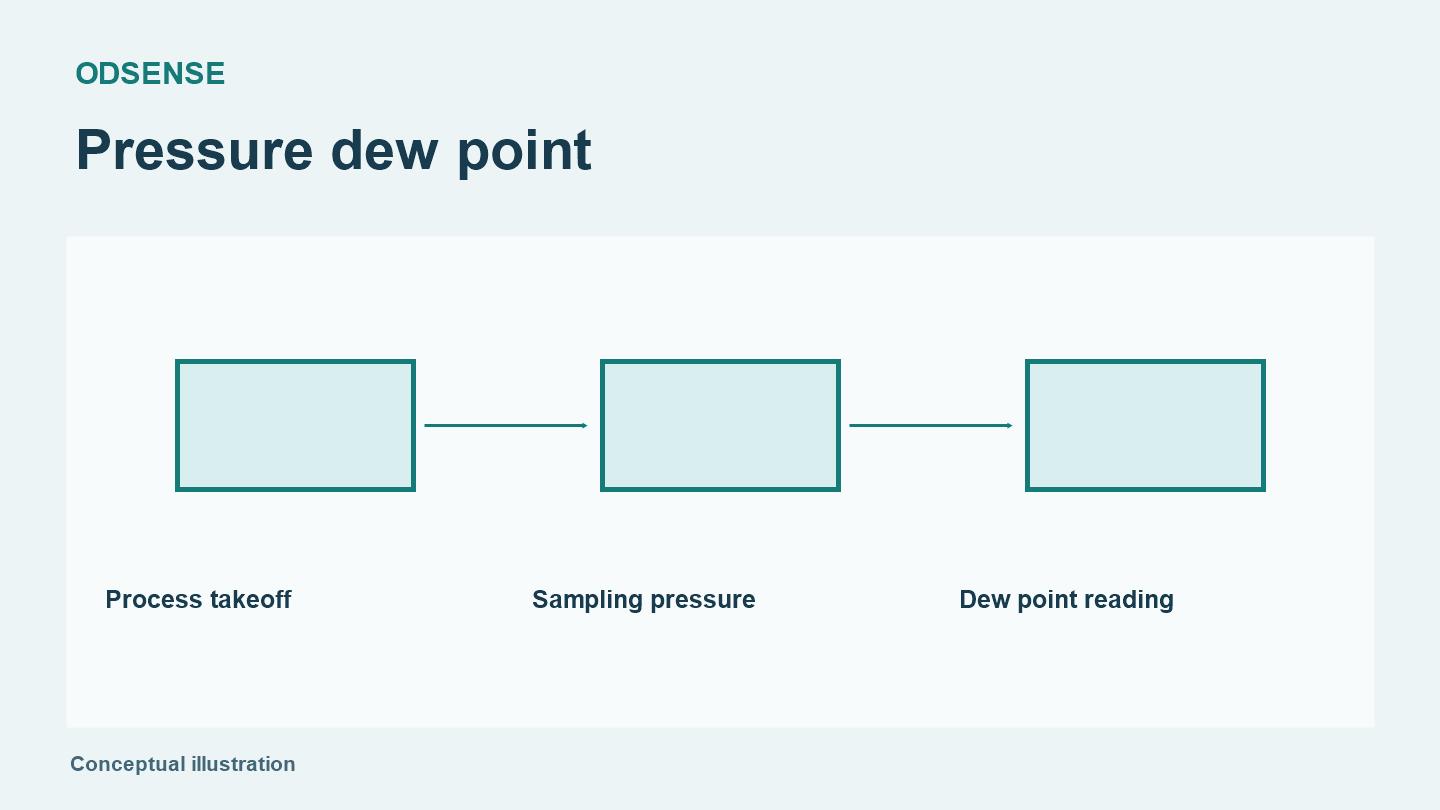
Draw the path from the process takeoff through any regulator, sampling cell, flow restriction, and exhaust. The pressure at the sensor may differ from the pressure at the takeoff. Vaisala's dew point measurement guide distinguishes in-line measurement and measurement after pressure reduction. See the dew point transmitter selection guide for range and installation considerations.
Compare on a consistent absolute-pressure basis
For a gas sample with unchanged water vapor fraction and no condensation or evaporation in the line, the vapor partial pressure changes with total absolute pressure. A pressure correction must use absolute pressure and the appropriate saturation relation. A gauge pressure alone omits atmospheric pressure. Record the reference pressure and whether the instrument reports dew point or frost point in the range used. The dew point and frost point comparison covers the distinction.
Verify sample quality before calculating a correction
Use the model's required materials, pressure rating, and flow range. Allow enough time to purge stagnant gas and obtain a stable reading. Leaks or moisture exchange with sampling tubing can change the water content of dry air. Vaisala's sampling-cell application note covers these effects.
Read condensation risk at the location of interest
Compare the local pressure dew point with the coldest expected temperature at that pressure. Keep line pressure, sampling-cell pressure, and dew point together in the log. If an alarm appears only after a change in operating pressure, first check whether the measurement basis and local temperature changed. Use the condensation monitoring guide to interpret the temperature comparison.
Frequently asked questions
Can I compare an exhaust reading directly with a line-pressure specification?
Compare at the same pressure. Use a suitable in-line reading or a documented correction with the measured absolute pressures and a representative sample.