
Gauge vs Absolute Pressure Sensors: Choose the Reference Before the Range
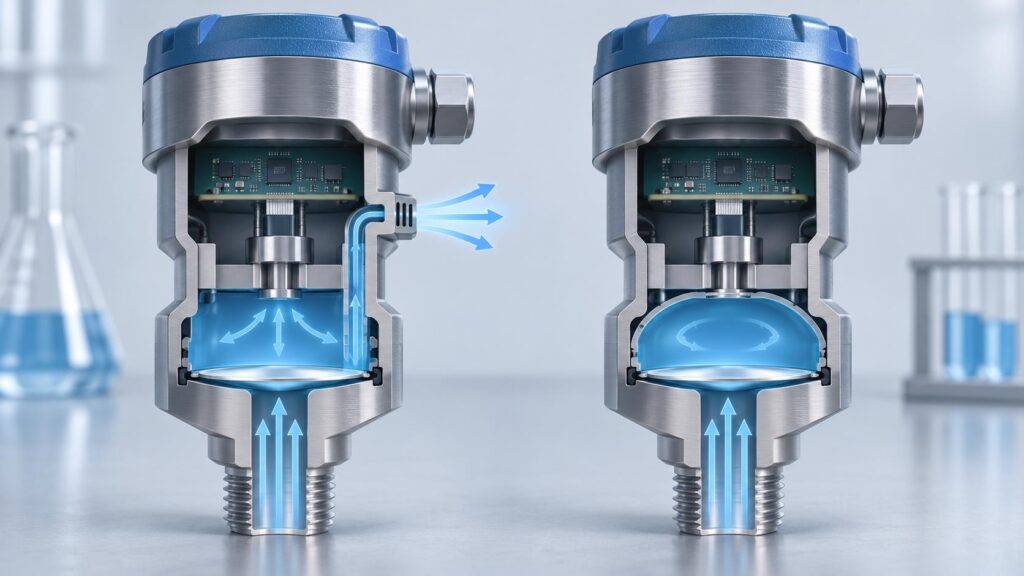
Gauge vs absolute pressure sensors differ in the reference used for the measurement. A gauge sensor compares process pressure with a reference related to atmospheric pressure; an absolute sensor compares it with a vacuum reference. Choose that basis before comparing ranges or signals. Two transmitters can have identical units and outputs yet report different values because their reference pressures differ.
Start with the pressure reference
A vented gauge measurement tracks the difference between process pressure and local ambient pressure. An absolute measurement reports pressure relative to vacuum. Differential pressure measures the difference between two specified process points. These are separate measurement requirements, even when a controller displays all of them in kPa.
WIKA's pressure-type guide explains these reference relationships. The useful purchasing question is what the process decision compares: pressure above the surrounding atmosphere, total pressure, or the difference across a component. Write the answer into the tag description rather than relying on a unit label alone.
Match the reference to the decision
For many pipe-pressure checks, gauge pressure provides the required relationship to the surrounding atmosphere. For vacuum assessment or calculations that require total pressure, absolute pressure may be the appropriate input. A filter pressure drop requires two pressure locations, not merely a different label on one reading.
Emerson's gauge and absolute pressure overview describes these application distinctions. Confirm the equipment designer's required basis before ordering. The existing pressure transducer signal guide then helps separate this reference decision from the electrical-output decision.
Convert only with a compatible atmospheric value
Absolute pressure equals gauge pressure plus atmospheric pressure when all values describe compatible locations, times and units. Replacing atmospheric pressure with a fixed assumed value can introduce an unwanted difference as weather or elevation changes. A sea-level-corrected weather report is not automatically the local pressure at the instrument.
For a calculated channel, preserve the original measurements and document the atmospheric source, timestamps and conversion. The atmospheric pressure reporting guide explains why the reporting basis matters. Changing the displayed unit does not change the physical reference of the sensor.
Check vented and sealed construction details
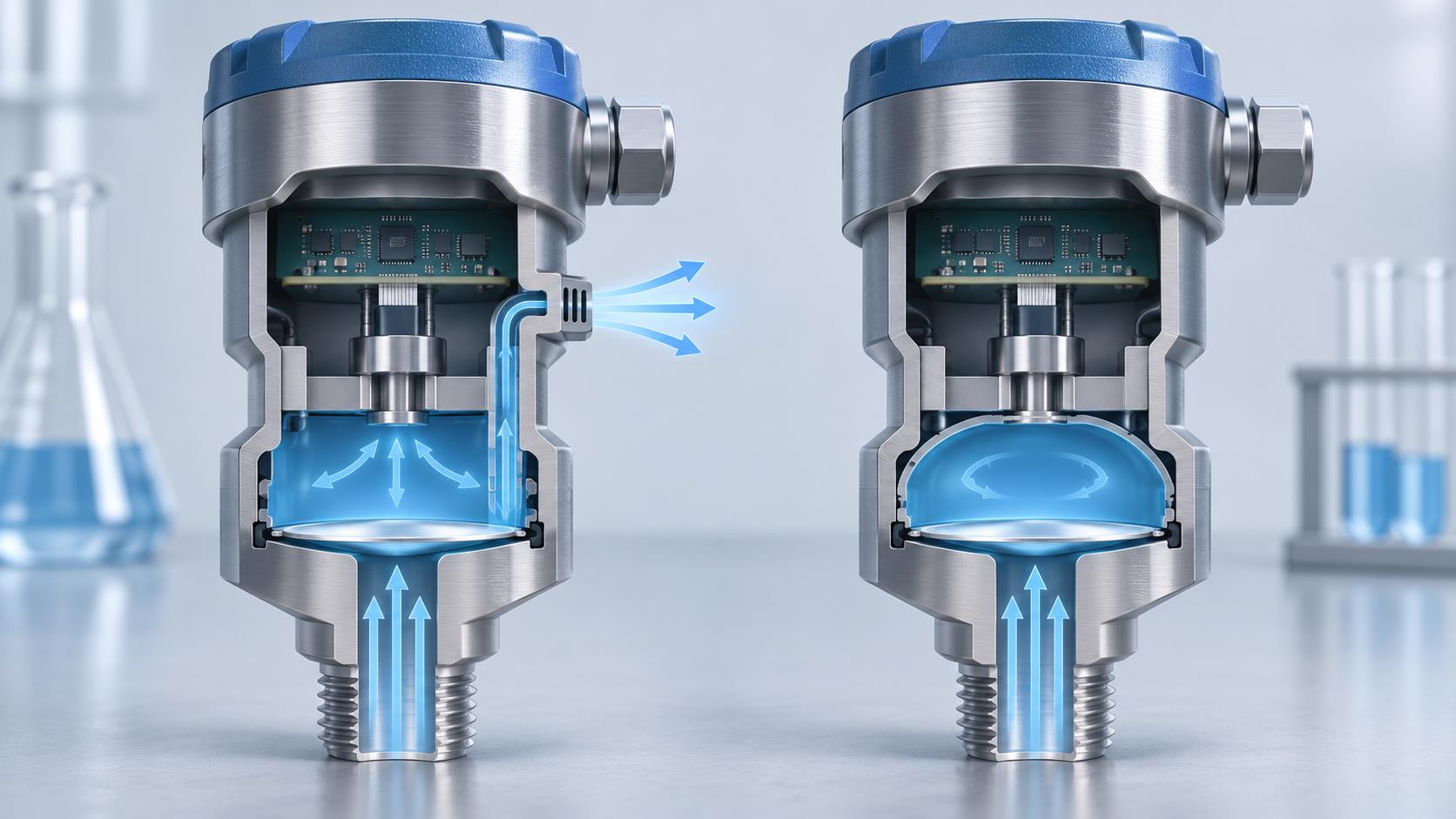
Do not assume every product described as gauge uses the same reference construction. A sealed reference and a reference vented to current local atmosphere need different interpretation. Ask the supplier to identify the construction and explain the specified pressure basis in the datasheet.
For vented designs, follow the installation instructions for cable vents, breathers and moisture protection. Do not block or modify a reference path to solve an unrelated weatherproofing problem. For a sealed-reference design, confirm the reference conditions rather than treating it as a continuously vented gauge sensor.
Commission the complete measurement chain
Record the model, range, reference type and controller scaling before testing. Use a compatible reference instrument and the manufacturer's approved procedure. An absolute sensor exposed to ambient air should not be forced to zero merely because the process connection is unpressurized. Ambient air is not a vacuum reference.
Compare the transmitter value with the controller's engineering value and channel label. Investigate scaling, wiring and reference mismatch before adjusting an offset. Process isolation, pressure release and test connections must follow the site's approved procedure and the instrument pressure limits.
Make the purchase specification unambiguous
Specify pressure type, normal range, expected extremes, media compatibility, process connection, electrical interface and installation environment. Include the required measurement basis in exported data and alarm documentation so later maintenance does not quietly change it.
When reviewing industrial sensor options, ask for the actual model documentation rather than assuming a category name proves suitability. A correct reference basis is necessary, but it does not establish accuracy, overload capacity or compatibility with a particular fluid.
Frequently asked questions
Can software turn a gauge sensor into an absolute sensor? It can calculate an absolute estimate if a suitable atmospheric measurement is available. The result inherits the limitations of both inputs and their synchronization.
Should an absolute sensor read zero in open air? No. Open air has atmospheric pressure. Follow the approved calibration procedure rather than zeroing it to match a gauge-pressure expectation.
Is differential pressure the same as gauge pressure? Gauge pressure is referenced to atmosphere in a vented design. A differential measurement compares two specified pressures; the application and port arrangement determine their meaning.