
Dissolved Oxygen Sensor Calibration: Temperature, Pressure and Salinity Checks
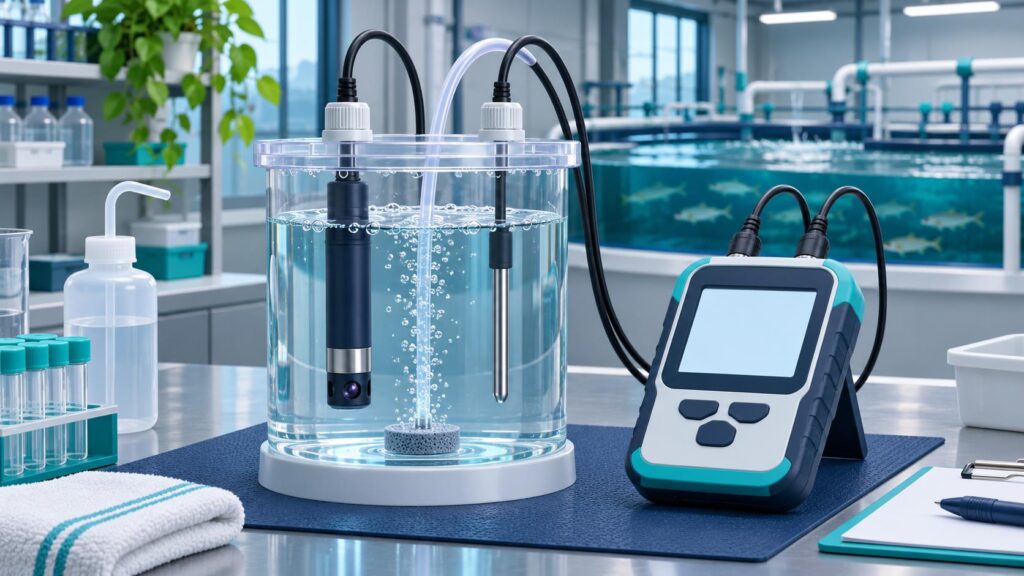
Dissolved oxygen sensor calibration requires a suitable reference condition and correct information about the measurement environment. Temperature, pressure and the reporting convention matter. Before accepting a calibration or comparing two instruments, identify the sensor technology, reference method and units used by the complete system.
This guide is for aquaculture operators, water-monitoring teams and integrators. It is a preflight checklist, not a replacement for the sensor manual. Optical and electrochemical instruments can have different preparation, service and calibration requirements, even when their displays show the same units.
Identify the sensor and reporting convention
Record the probe, sensing cap or membrane, transmitter and relevant software configuration. Confirm whether the instrument displays concentration in milligrams per litre, oxygen saturation as a percentage or another quantity. Those outputs should not be compared as though they were identical measurements.
Review the definition of the percentage value, including any local-saturation convention. Some manufacturers provide different reporting options. Our dissolved oxygen sensor selection guide explains the broader measurement choices; the model documentation must resolve the exact calibration procedure and output basis.
Inspect and prepare the sensing assembly
Check the cap or membrane, sensing surface, cable and connectors for damage or contamination. Follow the specified cleaning, conditioning and replacement instructions. If a service component has been replaced, confirm whether its identification, coefficients or calibration steps must also be updated in the instrument.
Keep a record of the pre-service reading and work performed. Cleaning, replacing a component and recalibrating at the same time can make a change difficult to explain later. For electrochemical equipment, also review any documented requirements for polarization, electrolyte and sample movement rather than applying an optical-sensor routine by habit.
Establish the reference condition specified by the manufacturer
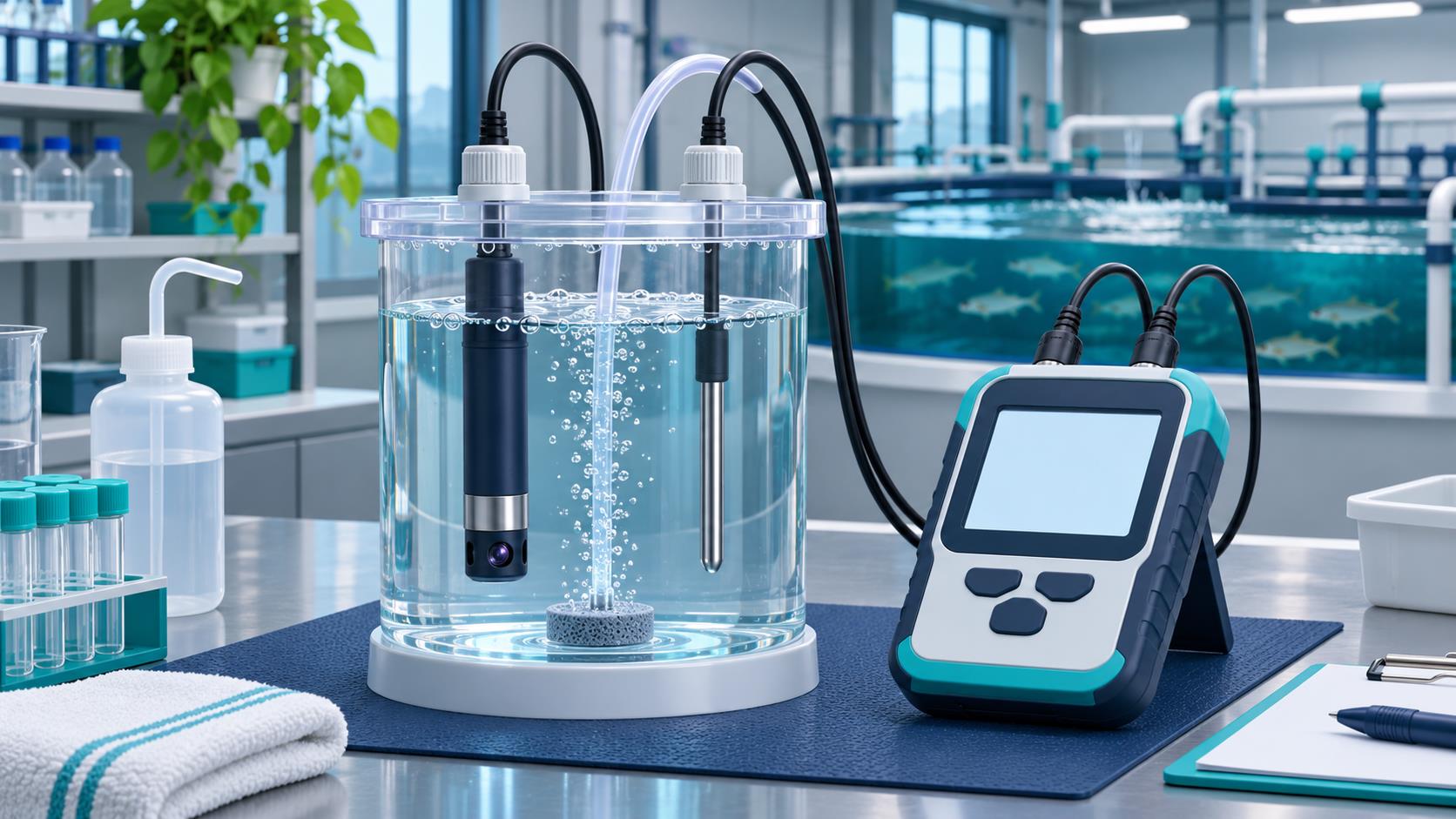
Depending on the device and procedure, the reference may involve water-saturated air, air-saturated water or a controlled gas environment. These arrangements require correct preparation; simply exposing a probe to an arbitrary room does not establish a known reference. Confirm which points are required for the instrument and task.
Allow adequate stabilization and avoid handling that changes probe temperature immediately before acceptance. Check for conditions that compromise the reference, such as unintended pressure, leakage or unsuitable placement. A zero-point check, when required, should use the approved method and appropriate handling procedure rather than an improvised substitute.
Verify local pressure and stable temperature
The oxygen reference depends on atmospheric pressure. Confirm whether the instrument measures pressure, accepts a manual entry or uses another documented approach. Where true local pressure is required, do not substitute a weather application's sea-level-adjusted value without checking its meaning.
Temperature also affects sensor response and oxygen behaviour. Verify that the relevant temperature reading has stabilized and represents the reference environment. Hamilton's optical calibration guidance describes these environmental influences, but its device-specific settings should not be copied directly into an unrelated sensor. Record the actual conditions used for the accepted calibration.
Check salinity and concentration conversion
Salinity affects oxygen solubility and is relevant when the instrument reports dissolved oxygen concentration. Confirm whether salinity is measured by a suitable channel, entered manually or handled through a documented configuration. A correct reference check does not establish that an incorrect salinity entry is harmless.
When instruments disagree, compare temperature, salinity, pressure treatment and units before adjusting either device. A freshwater setting used for a saline sample can undermine comparability. The water quality sensor category is a starting point for discussing the required measurement channels and exact configuration with the supplier.
Record acceptance and a separate deployment check
Use acceptance limits from the applicable procedure and manufacturer documentation, not a universal pass percentage. Record the reference method, conditions, result, diagnostic warnings and calibration changes. If a separate verification is required, retain its observed result rather than immediately adjusting away the difference.
After returning the sensor to service, review the reading with the actual operating conditions and sufficient stabilization. For aquaculture projects, integrate these checks into the water quality monitoring plan. Set later verification and maintenance intervals using exposure, operating history and the consequence of an incorrect reading.
Frequently asked questions
Must every air calibration display exactly the same percentage?
No. The expected value depends on the instrument's reporting convention and procedure, including pressure treatment. Follow the exact model instructions.
Does successful calibration prove an installed reading is always correct?
No. Fouling, installation, sample conditions, configuration and handling can still affect the result. Calibration is one part of measurement quality control.
Sources: YSI dissolved oxygen measurement and units, YSI dissolved oxygen FAQ, Hamilton optical calibration variables.