
How to Measure Dissolved Oxygen in Water: Sensor Selection for Aquaculture
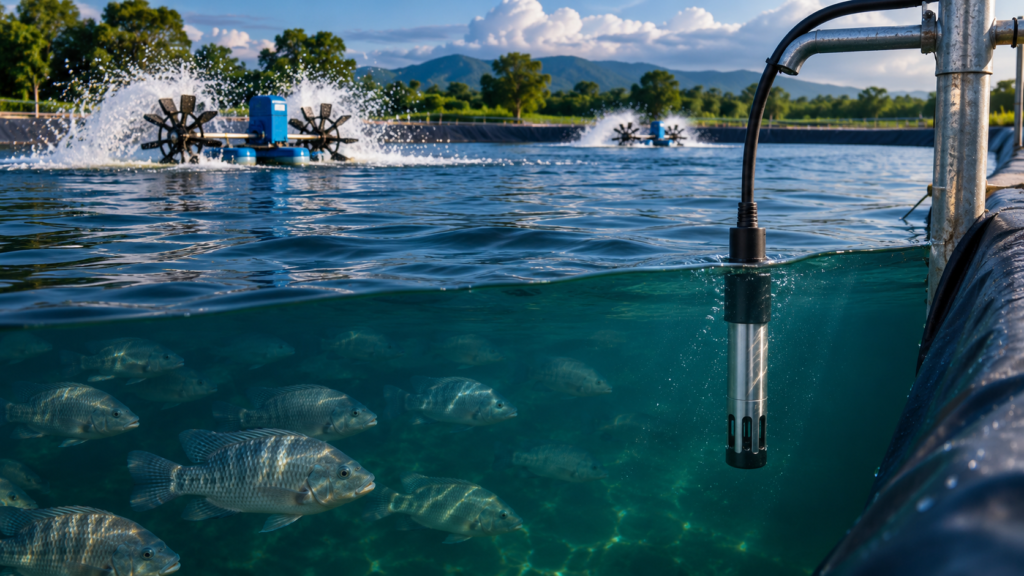
Dissolved oxygen (DO) is oxygen present in water in dissolved form. It can be measured with optical or electrochemical probes and, in suitable laboratory or field workflows, by a chemical method such as Winkler titration. A useful aquaculture measurement requires more than a probe reading: location, depth, calibration, temperature, salinity and maintenance all affect how the result should be interpreted.
For continuous monitoring, choose a sensor that suits the water, mounting arrangement and controller. Use the result with knowledge of the species, stocking density, temperature and the farm's operating procedures. There is no single oxygen threshold that is safe for every species or situation.
Why dissolved oxygen changes
Oxygen enters water through surface exchange and aeration. It is consumed by fish, microbial activity and decomposition; photosynthesis and respiration can cause daily variation in ponds containing algae or plants. Temperature affects oxygen solubility, and salinity and atmospheric pressure also influence saturation calculations. A reading at one time and location may not represent the entire pond or tank.
Continuous data makes trends visible, including a sustained overnight decline or a recovery after aeration. The signal should support an operating procedure that identifies who receives an alarm, what action to take, and how to verify the condition. It should not be treated as a substitute for appropriate animal husbandry or a backup aeration plan.
mg/L and percent saturation
DO concentration is commonly reported in mg/L, the mass of oxygen per volume of water. Percent saturation compares the measured condition with an estimated saturation condition under specified temperature, pressure and salinity assumptions. The same mg/L value can correspond to different saturation percentages as conditions change.
Record the unit alongside the value. When instruments report percent saturation, check how the temperature and pressure inputs are obtained and whether salinity compensation is needed. An incorrect salinity setting can create a misleading comparison across sites. Do not compare a percent-saturation alarm threshold to an mg/L reading.
Optical and electrochemical probes
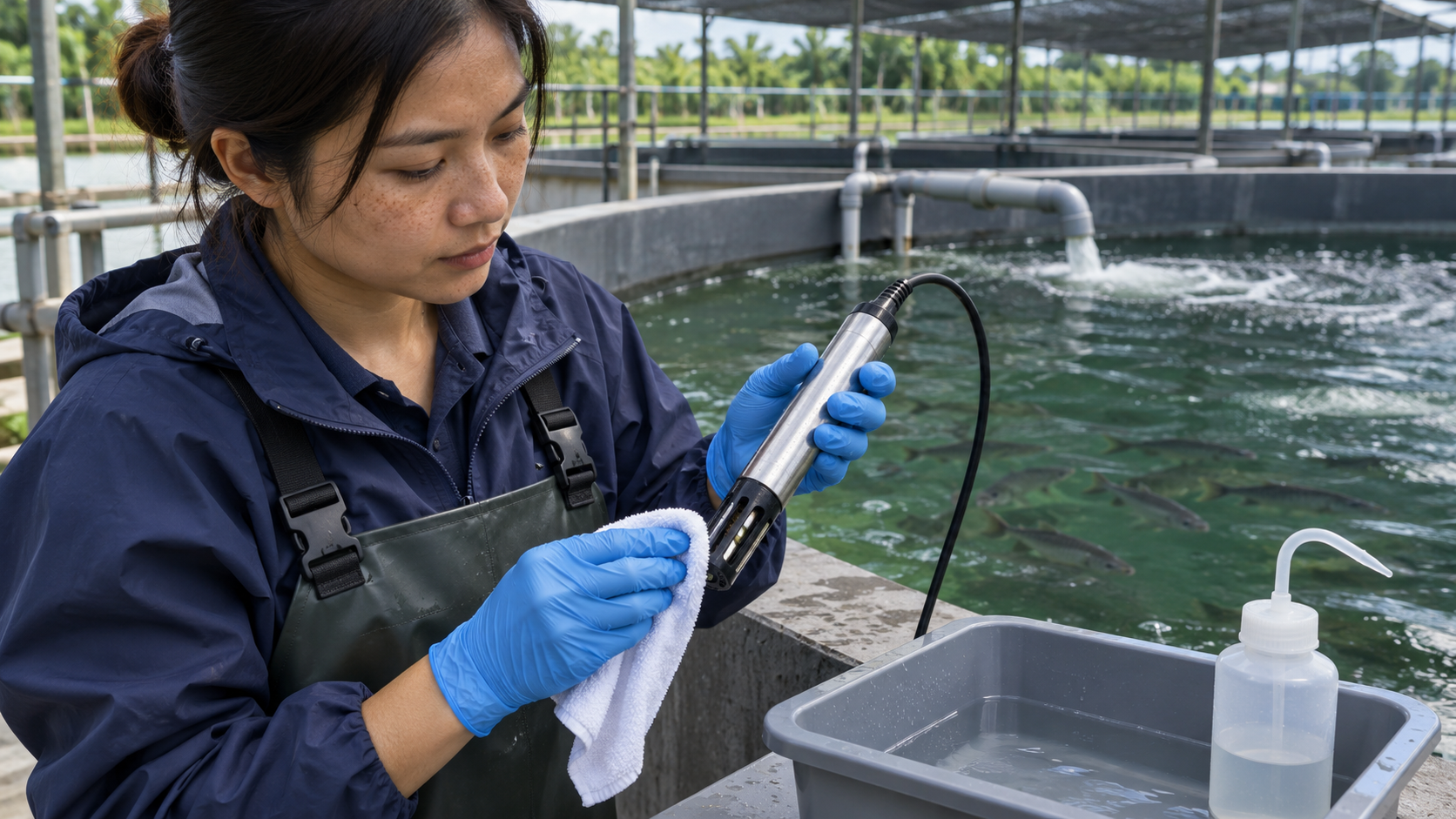
Optical DO probes use a light-responsive sensing material whose emission characteristics change in the presence of oxygen. They do not consume oxygen at the sensor surface in the way an amperometric membrane sensor does. Optical sensors still require maintenance: fouling, a damaged sensing surface, an aging cap and incorrect calibration can affect readings.
Electrochemical probes include polarographic and galvanic designs. A membrane separates the sensing elements from the water; oxygen passes through it and participates in an electrochemical reaction. Membrane condition, electrolyte, calibration and the manufacturer's required water movement matter. Some polarographic systems require a warm-up period. Follow the model's instructions rather than transferring procedures between technologies.
Chemical titration can serve as a reference when sampling, handling and analytical procedure are controlled. It is usually a discrete measurement rather than an unattended continuous signal. A comparison is meaningful only when both methods sample the same location and time and the reference method is appropriate for the water.
Select a measurement point
Choose a location that represents the operational question. A probe immediately adjacent to an aerator may report a well-oxygenated local plume while another area is less well mixed. A quiet corner may be useful as a supplementary risk point but may not represent the whole pond. Consider the inlet, outlet, water movement, depth, biofouling, accessibility and exposure to sediment or impact.
In deeper or stratified systems, oxygen can vary with depth. A surface reading alone may not reveal bottom conditions. Use profiles or additional probes where the risks justify them. Keep the sensing surface submerged within its approved installation envelope, protect cables from abrasion and allow safe access for cleaning and checks. Avoid bubbles trapped against the sensing surface.
Calibration, verification and cleaning
Follow the sensor's documented calibration procedure and environmental requirements. Record the instrument identity, date, calibration method, temperature, compensation settings and result. Distinguish calibration, which adjusts a measurement relationship, from a verification check, which compares a reading without necessarily changing it.
Clean fouling before calibration or comparison when instructed by the manufacturer, using materials compatible with the sensing surface. Compare the fixed sensor against a maintained reference instrument at the same location and depth. Allow both to stabilize. If readings disagree, inspect fouling, bubbles, flow, cable connections, compensation settings and calibration history before changing alarm limits.
Calibration frequency depends on the technology, water conditions, required confidence and manufacturer guidance. A heavily fouling aquaculture pond may require more frequent inspection than a clean test environment. Establish an inspection schedule from observed conditions and review it when water quality or seasonal operation changes.
Connect the reading to a monitoring system
Before ordering, specify the required concentration range, water temperature, salinity, probe mounting, cable length, power supply and controller interface. Check the selected model's communication protocol and register map where a digital connection is used. A displayed value is only useful if the receiver handles units, update rates, invalid values and sensor faults correctly.
Test the complete path from sensor through controller to alarm recipient. Include loss of power, disconnected cable and stale data in the operational test plan. Select alarm thresholds with qualified aquaculture staff for the species and conditions; use separate procedures for a sensor fault and a confirmed low-oxygen event.
See the ODSENSE dissolved oxygen sensor, the water quality sensor range and the aquaculture water quality monitoring solution for related applications. Confirm the sensing principle and configuration of the specific product before comparing it with the generic methods described here.
Frequently asked questions
Does warmer water hold less oxygen?
At otherwise comparable conditions, oxygen saturation concentration generally decreases as water temperature increases. Actual pond readings also depend on biological activity, aeration and mixing.
Does an optical sensor need cleaning?
Yes. Optical measurement avoids a membrane-and-electrolyte assembly in many designs, but fouling and damage to the sensing surface still require attention according to the manufacturer.
Can one sensor protect an entire pond?
One point can reveal a local trend, but it cannot guarantee that every location and depth has the same oxygen concentration. Placement and the need for additional points depend on mixing and the consequences of low oxygen.
Technical references: USGS: dissolved oxygen field methods; USGS: dissolved oxygen and water.