
Agricultural Temperature Sensors: Air, Soil and Surface Measurements
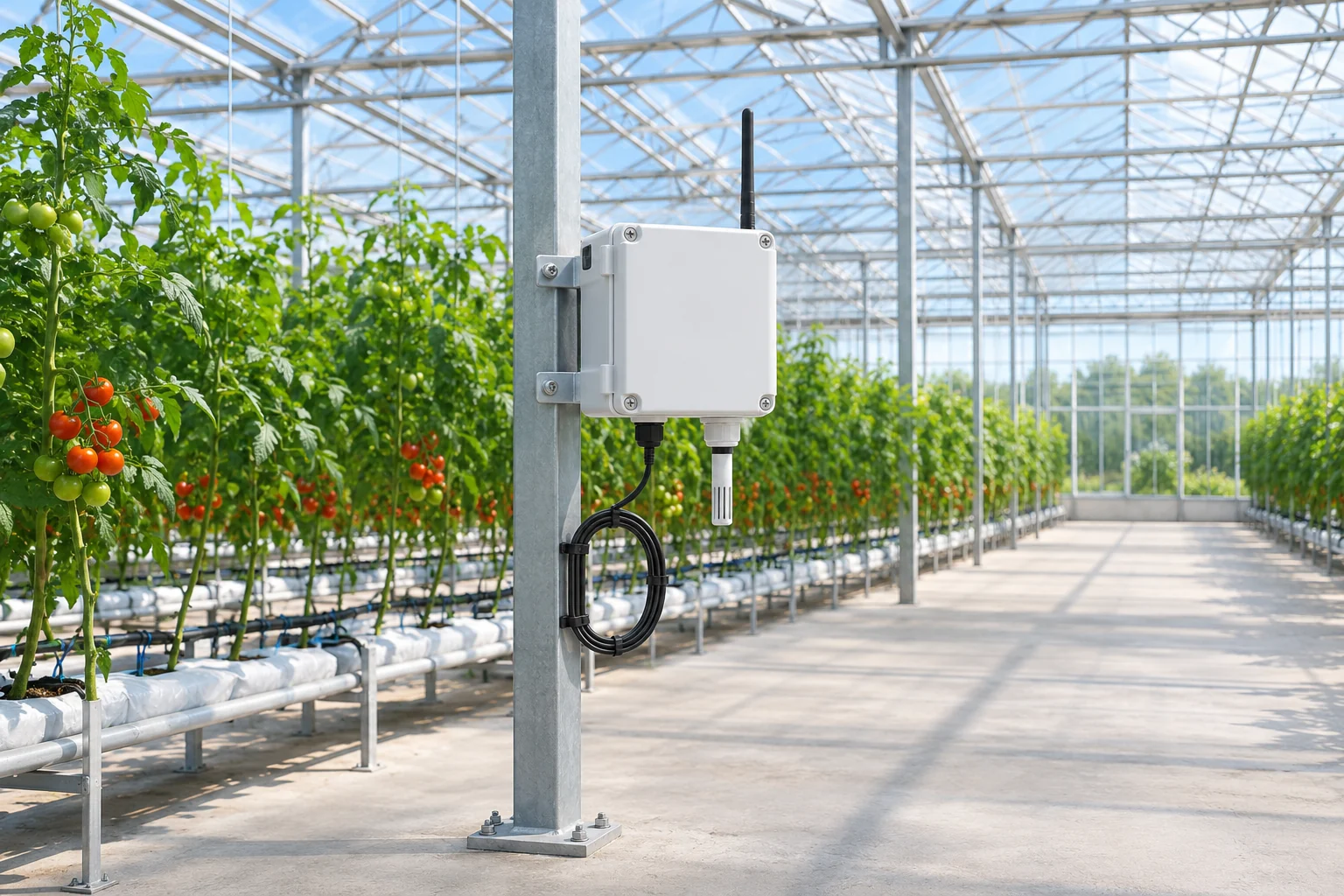
A temperature sensor in agriculture should be assigned to a defined measuring task. Air temperature, soil temperature and surface temperature describe different conditions. Specify which quantity supports the crop or operating decision before choosing a probe or interpreting a displayed value.
Name the measuring target
| Target | Information to define |
|---|---|
| Crop air | The zone and exposure the reading should represent |
| Soil or substrate | The material, depth and installation arrangement |
| Surface | The actual surface and suitable contact or non-contact method |
| Equipment area | The operating condition being observed |
| Data interpretation | The person responsible for relating the measurement to the decision |
Do not substitute a convenient equipment-area temperature for a crop-zone result without a justified assessment. Similarly, an air reading should not be presented as the temperature of every leaf, root or surface. Keep the measuring target with each data record.
Choose location and method together
Review the site with the operator and mark meaningful zones. For a probe in soil or substrate, retain the depth and installation details. For an air point, record the relevant exposure and surrounding equipment. Use the selected instrument instructions rather than transferring one generic mounting rule to every task.
Include service access and the practical replacement process in the design. A point identifier should remain linked to the target and location even when the physical sensor changes. Keep device identifiers and installation history separately.
Align the time basis of comparisons
Document sampling, reporting and any summary interval. A short observation and a longer average are different descriptions of a changing condition. Before comparing two records, check the observation target, time basis and configuration used for each.
For a reference comparison, agree a suitable method and acceptance criteria. Retain conditions and original results before applying an adjustment. Do not treat agreement at one convenient condition as evidence for every agricultural installation.
Prepare the project requirement
- Identify the target, zone and location.
- State the expected conditions and required performance.
- Confirm the actual probe and output configuration.
- Keep time, units and missing-data behavior clear.
- Assign interpretation and maintenance responsibilities.
Use the farm measurement guide with the soil sensor information to prepare the measurement requirements. Confirm the specific device model, fitted options and applicable documents before ordering.
Frequently asked questions
Is soil temperature interchangeable with air temperature?
No. Record the actual target and method used for each measurement.
Does a temperature reading establish a crop action threshold?
The appropriate interpretation depends on the crop system and decision; the sensor alone does not define it.