
Light Sensors for Agriculture: Illuminance, PAR and Placement
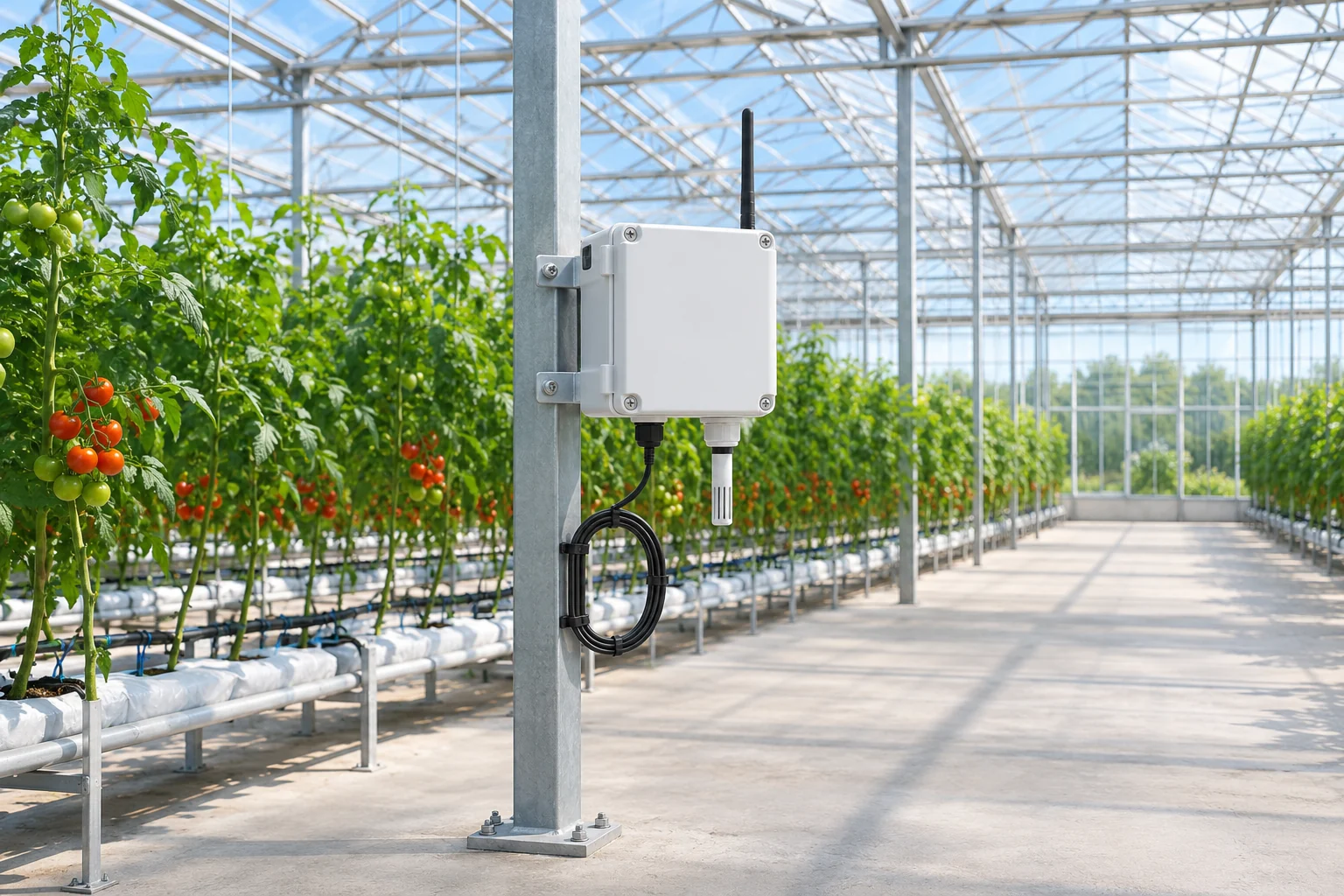
A light sensor for agriculture should measure the quantity relevant to the growing decision. Illuminance, photosynthetic light measurements and global solar radiation are different quantities. A shared word such as light does not make their readings interchangeable or establish a universal conversion between them.
Specify the quantity before the sensor
Illuminance in lux is weighted to human visual response. Plant-light measurements such as PPFD describe a different measurement basis. State the quantity, unit and intended use in the project brief, then ask the supplier to confirm the appropriate sensing method and documentation.
LI-COR light measurement overview
| Project requirement | What to confirm |
|---|---|
| Illumination assessment | The illuminance quantity and reported unit |
| Plant-light assessment | The applicable photosynthetic measurement and spectral basis |
| Solar radiation record | The radiation quantity and instrument suitability |
| Location | The area, height and exposure the reading must represent |
| Time record | Whether the application needs an instantaneous value or a documented time integration |
Do not apply an assumed lux-to-plant-light factor
A conversion needs a justified relationship for the light conditions and intended method. Ask which source spectrum and assumptions support it. Keep a measured quantity separate from any value derived in software, and retain the original measurement when calculations are used.
For projects using artificial lighting, describe the lighting arrangement and operating modes. For natural light, describe exposure and shading. The supplier needs this information to review suitability; a generic range alone does not answer the measurement-method question.
Place the measuring point deliberately
Mark where the sensor will be installed and which part of the crop environment it represents. Consider nearby structures, changing canopy conditions and access for inspection. A convenient mounting location should not silently become a claim about light throughout the growing area.
Record orientation and the final arrangement using the selected instrument instructions. Where the project requires a time-integrated result, verify the time basis and handling of missing intervals. A short observation and a daily result should not be compared without accounting for their different meanings.
Make a useful procurement and acceptance record
- Name the required quantity and unit.
- Document the relevant light sources and installation.
- Request the performance conditions and reference-check method.
- Confirm the output and receiving-system interpretation.
- Separate mandatory channels from optional instruments.
Use the agricultural sensor category with the greenhouse measurement planning guide to prepare the measurement requirements. Confirm the specific device model, fitted options and applicable documents before ordering.
Frequently asked questions
Can any light sensor be used for plant-light measurement?
Confirm the quantity and method. An illuminance output alone does not establish a plant-light measurement.
Does one location describe the entire canopy?
Assess spatial differences and the intended decision before assigning one point that role.