Water hardness monitoring
Technical specifications
| General Parameters | |
|---|---|
| Model | YF500-HD |
| Operating Voltage | DC 10V–30V, standard 24V DC |
| Power Consumption | 0.5W at 24V DC |
| Waterproof Rating | IP68 |
| Pressure Resistance | 0.6 MPa |
| Standard Communication | RS485, Modbus RTU |
| Optional Communication | LoRaWAN / WiFi / 4G |
| Default Cable Length | 5 meters; customized lengths available |
| Mounting | Pipe mount / Wall mount |
| Main Unit Dimensions | 124 × 94 × 45 mm |
| Operating Temperature | 0°C to 50°C |
| Operating Humidity | 0–99% RH, non-condensing |
| Sensor Measurement Specifications | |||
|---|---|---|---|
| Measurement | Range | Resolution | Accuracy |
| Total Hardness Calcium and magnesium | 0.04–1000 mg/L Maximum optional range: 40000 mg/L | 0.01 mg/L | < ±10% |
| Temperature | 0 to 50°C | 0.1°C | ±0.1°C |
| Model | Communication | Recommended Use |
|---|---|---|
| YF500-HD(R) | RS485 Modbus RTU | PLC, controller and data logger integration |
| YF500-HD(L) | LoRaWAN | Large-area wireless monitoring |
| YF500-HD(W) | WiFi | Local network and facility monitoring |
| YF500-HD(G) | 4G | Remote monitoring without local network access |
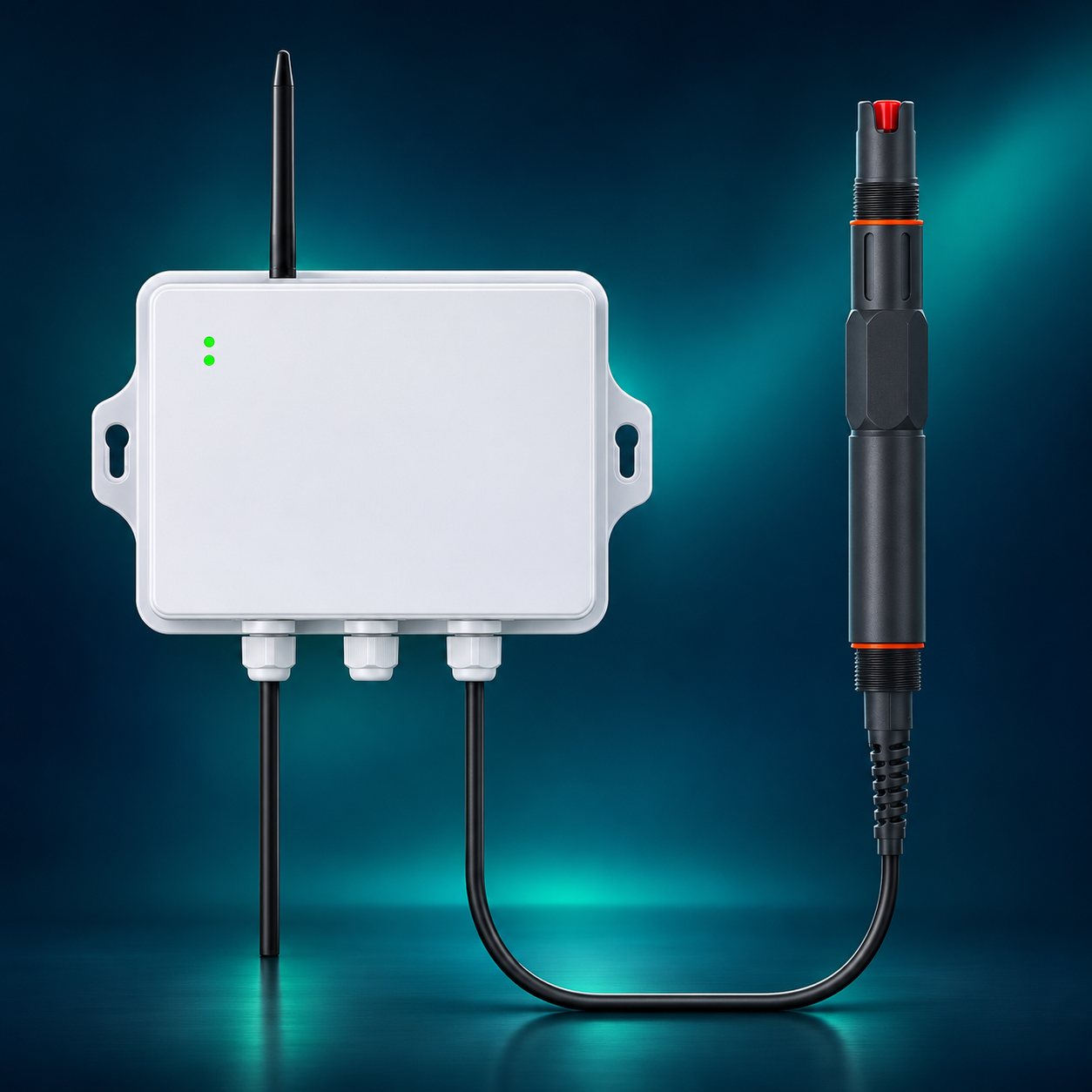
YF500-HD total hardness monitoring
The YF500-HD is a water quality sensor for monitoring total hardness associated with calcium and magnesium. The listed standard measurement range is 0.04–1,000 mg/L, with an optional maximum range of 40,000 mg/L. Select the range for the actual water and process; the standard and optional ranges should be identified in the ordering configuration.
Understanding hardness measurements
Water hardness is associated principally with dissolved calcium and magnesium. It can vary with the water source, mixing and treatment. Monitoring a trend can help operators observe changes in the water supplied to a process or treatment stage, but the reading should be interpreted with the measurement method and units used by the site.
When comparing instruments or laboratory results, confirm that the values use the same hardness expression and reference basis. A concentration displayed as one chemical equivalent cannot be assumed to be directly interchangeable with a differently expressed result without the appropriate conversion.
Where to measure
Choose a point that answers the operating question. In a treatment system, a representative location before or after a treatment stage may be useful for observing changes. Where water is blended or dosed, consider mixing and flow so that the sample reaching the sensor reflects the condition of interest.
Provide safe access to the probe and avoid areas where deposits or stagnant water are likely to interfere with the measurement. Record the sample point, range and operating conditions when comparing measurements over time.
Range, temperature and communication
The product table lists 0.01 mg/L resolution and an optional upper range. Confirm the selected range and applicable accuracy with the order. The sensor also lists a 0–50 °C temperature measurement range; review the operating conditions of both the probe and main unit for the installation.
RS485 Modbus RTU is the listed standard communication. The L, W and G variants are listed with LoRaWAN, WiFi and 4G respectively. Confirm the ordering code, receiving controller, power and network requirements rather than assuming every output is supplied in one unit.
Installation and ongoing care
Follow the supplied mounting, immersion and cable instructions. The product table lists a 5 m default cable and customized lengths. Protect the cable from tension and provide sufficient access for inspection and removal. Use suitable reference procedures and calibration solutions as specified for the installed electrode.
Water composition and deposits can affect the sensing surface. Establish a maintenance schedule for the actual water, clean using the approved procedure and keep records of calibration and inspection. Investigate unexpected readings together with process conditions and probe condition.
For product selection, provide the water type, expected hardness range, measurement location and preferred communication method. Explore the water quality sensor range for related measurements.
Selection and integration
Industry applications
- Water treatment
- Process industries