
What Is Water Turbidity? Measurement, Sensor Selection and Maintenance
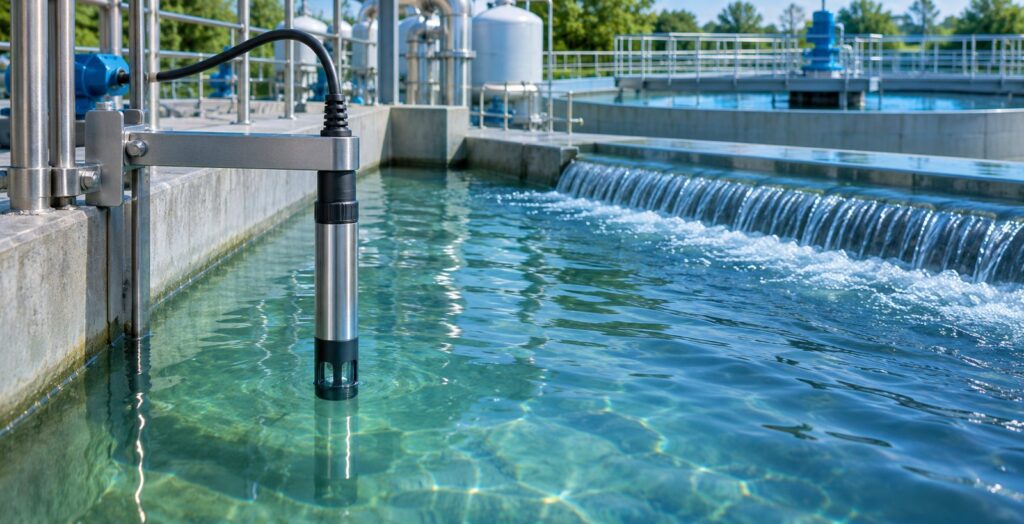
Water turbidity describes how suspended material affects the passage of light through water. Particles and other constituents scatter or absorb light, so turbid water can appear cloudy. The reading is useful for tracking changes in water conditions, but it does not identify the material causing the cloudiness and cannot, by itself, prove that water is safe to drink.
For industrial users, aquaculture operators and environmental monitoring teams, the most useful question is often not whether a single number is high or low, but whether a sustained change has occurred at a known sampling point. A dependable turbidity programme combines a suitable instrument, representative installation, documented cleaning and an interpretation procedure.
What causes turbidity?
Soil particles, organic matter, algae and other suspended materials can affect an optical measurement. The relationship between a turbidity reading and actual suspended-solids concentration is site-specific: particle size, shape, colour and composition influence light scattering. A reading cannot be converted into mass concentration with a universal factor. If mass concentration is needed, establish and validate a relationship using representative samples and an appropriate laboratory method.
Events such as rainfall, tank mixing, changes in flow, cleaning and process disturbances may cause a trend to move. Review operating logs and other measurements alongside the turbidity record before deciding what caused a change.
How a turbidity sensor measures water
Many instruments direct light into the water and detect light scattered by material in the sensing volume. Instrument design matters: light source, detector geometry and method influence the result. Units such as NTU are associated with particular measurement methods; similarly named readings from instruments with different optical designs are not necessarily interchangeable. Record the instrument, method, calibration standard and unit when comparing datasets.
Optical windows must remain clean. The USGS turbidity guidance notes that fouling and scratches can affect the optical signal in different directions. Do not assume that every unexpectedly high reading represents a real increase in suspended material.
Turbidity is one part of water quality
Turbidity describes an optical response, not a complete chemical or biological analysis. Clear water may still contain dissolved contaminants or microorganisms, while a change in turbidity does not reveal exactly which material is present. Pair it with parameters selected for the application, such as temperature, pH, conductivity or dissolved oxygen, and use laboratory analysis when the decision requires it.
For a broader view of available measurement areas, explore water quality sensors. In aquaculture, interpret optical readings alongside the operating conditions discussed in aquaculture water quality monitoring.
Choose the measurement location
The sampling point should represent the water relevant to the decision. In a basin or pond, consider circulation, depth, inflow and local mixing. In a pipe or flow cell, check flow conditions, pressure, mounting and access. Avoid locating the optical window where sediment accumulates or bubbles repeatedly cross the sensing area, unless the design is intended for those conditions. Document the position so future readings can be compared meaningfully.
Where a regulatory or contractual method applies, follow its site-selection and reporting requirements. A convenient access point is not automatically a representative sampling point. During commissioning, compare the continuous trend with observations and appropriately collected samples across a range of conditions.
Select a sensor for the actual application
Start with the expected range and the smallest change that matters operationally. Check the measurement principle, units, calibration method, materials, immersion conditions, temperature limits and protection of the full assembly. Confirm the required output, power, cable length and controller compatibility for the selected version. In dirty water, cleaning access and maintenance needs may be as important as the initial purchase price.
If comparing models, ask how the stated accuracy was tested and whether it is expressed as an absolute value, a percentage of reading or a percentage of full scale. These expressions are not equivalent. Do not apply a specification from one instrument to another configuration without verification.
Establish cleaning and calibration routines
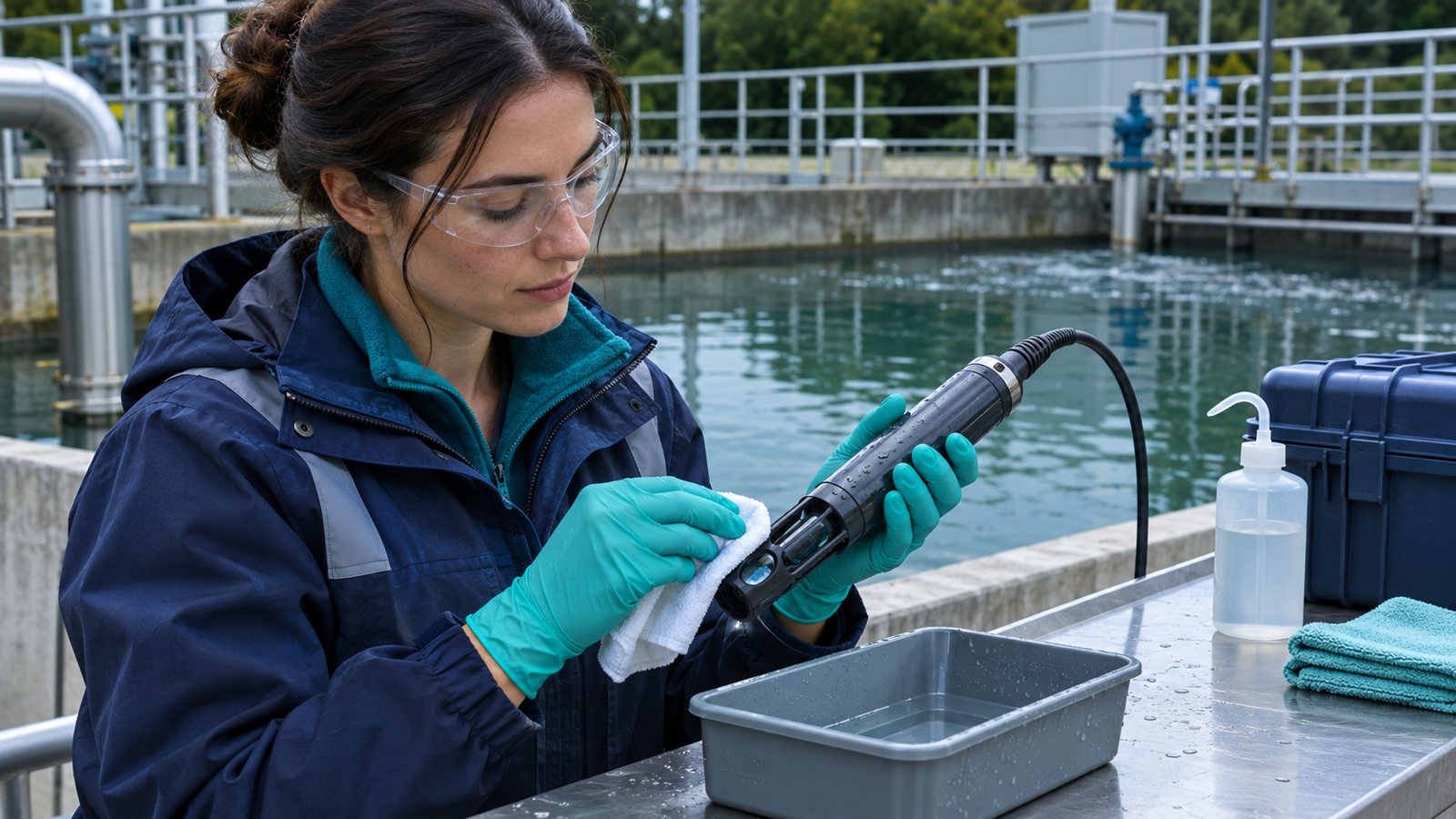
Before removing a probe, note the displayed reading and process conditions. Clean the sensing surfaces using the manufacturer's approved method, avoiding abrasive materials that could scratch an optical window. Reinstall at the same location and observe whether the reading changes. A large before-and-after difference is useful evidence for adjusting the cleaning schedule, although it does not by itself quantify the original measurement error.
Calibration compares the sensor's response with suitable standards under a defined procedure. Use the manufacturer's recommended standards and handling instructions; check expiration, contamination, temperature and bubbles. Record the sensor identification, standard, date, result and any adjustment. A check with a reference sample is not a substitute for calibration unless the relevant procedure explicitly allows it.
Troubleshoot unexpected readings
If the reading drifts gradually, inspect fouling, ageing and the interval since the last check. If it changes suddenly, look for bubbles, a disturbed probe, a process event or electrical communication faults. Compare with a properly collected sample when practical, but remember that a sample and an installed sensor may represent different times and locations. Preserve the original data and mark maintenance periods so that operators do not mistake an intervention for a process event.
Frequently asked questions
Is turbid water always unsafe?
Turbidity alone cannot determine safety. The required assessment depends on the use of the water and may involve chemical, microbiological and regulatory testing.
Can NTU be converted directly into suspended solids?
There is no universal conversion. A site-specific relationship requires representative sampling and validation because the particles themselves affect the optical response.
How often should a turbidity sensor be cleaned?
The interval depends on the water, sensor design and decision risk. Start with manufacturer guidance and adjust using documented inspection and before-and-after checks.
Sources: USGS turbidity overview; EPA turbidity fact sheet; USGS continuous monitoring guidance.