
Remote Temperature and Humidity Sensors: Probe Distance vs Connectivity
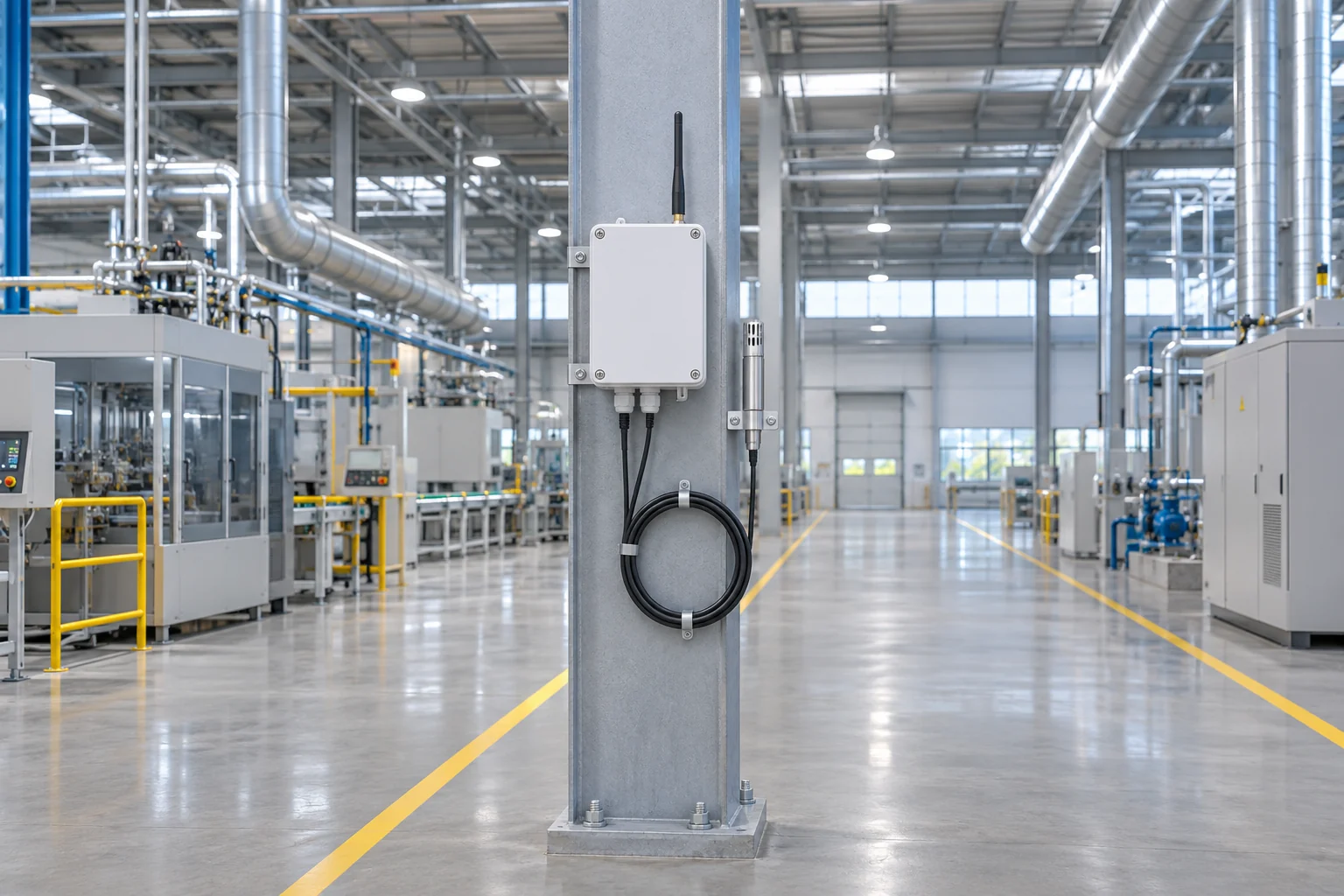
A remote temperature and humidity sensor can refer to two different arrangements: a probe positioned away from its electronics, or measurement data accessed through a communication link. Specify which meaning applies. A remote probe does not automatically provide wireless access, and a wireless device does not automatically include an extended probe.
Draw the measurement and communication paths
Identify the probe, electronics, power supply and receiving system on a simple drawing. Mark the environment each component experiences. This separates probe-location requirements from the network or service arrangement used to reach the data.
| Requirement | Question to resolve |
|---|---|
| Remote probe | What cable, assembly and installation are approved? |
| Electronics location | Which environment and mounting limits apply? |
| Connectivity | Which actual interface and receiving equipment are supplied? |
| Data access | Who provides the application, account and interpretation? |
| Service | How are the measuring point and communications maintained? |
Do not infer an extension limit
Ask for the permitted arrangement for the selected probe and instrument. A general communication distance does not establish an allowable probe-cable extension. Include any approved extension, adapter or receiving module explicitly in the quotation and installation record.
Keep measurement range and component operating conditions separate. Moving a probe into a different environment does not extend the ratings of the electronics or other parts of the assembly. Request written clarification where documents describe different components ambiguously.
Specify what remote access includes
For a networked arrangement, identify the communication technology, receiving service and application. Record who owns configuration and access. A catalog option such as WiFi or LoRaWAN does not establish that a platform, subscription or gateway is included.
Check sampling, reporting and displayed time information separately. A remote display can retain an old value after communication stops. Agree how the application identifies absent or stale data before it is used operationally.
Test the intended arrangement
- Use the actual probe and ordered interface configuration.
- Verify location identity, units and timestamps.
- Record installation and communications settings.
- Observe permitted interruption and recovery behavior.
- Retain service and replacement responsibilities.
Use the temperature and humidity sensor information with the LoRaWAN deployment guide to prepare the measurement requirements. Confirm the specific device model, fitted options and applicable documents before ordering.
Frequently asked questions
Does remote mean wireless?
No. State whether it describes a separated probe or data connectivity.
Can a communication cable extend any probe?
Use only a documented arrangement for the selected instrument; the two functions are not automatically interchangeable.