
Types of Anemometer and When to Use Each
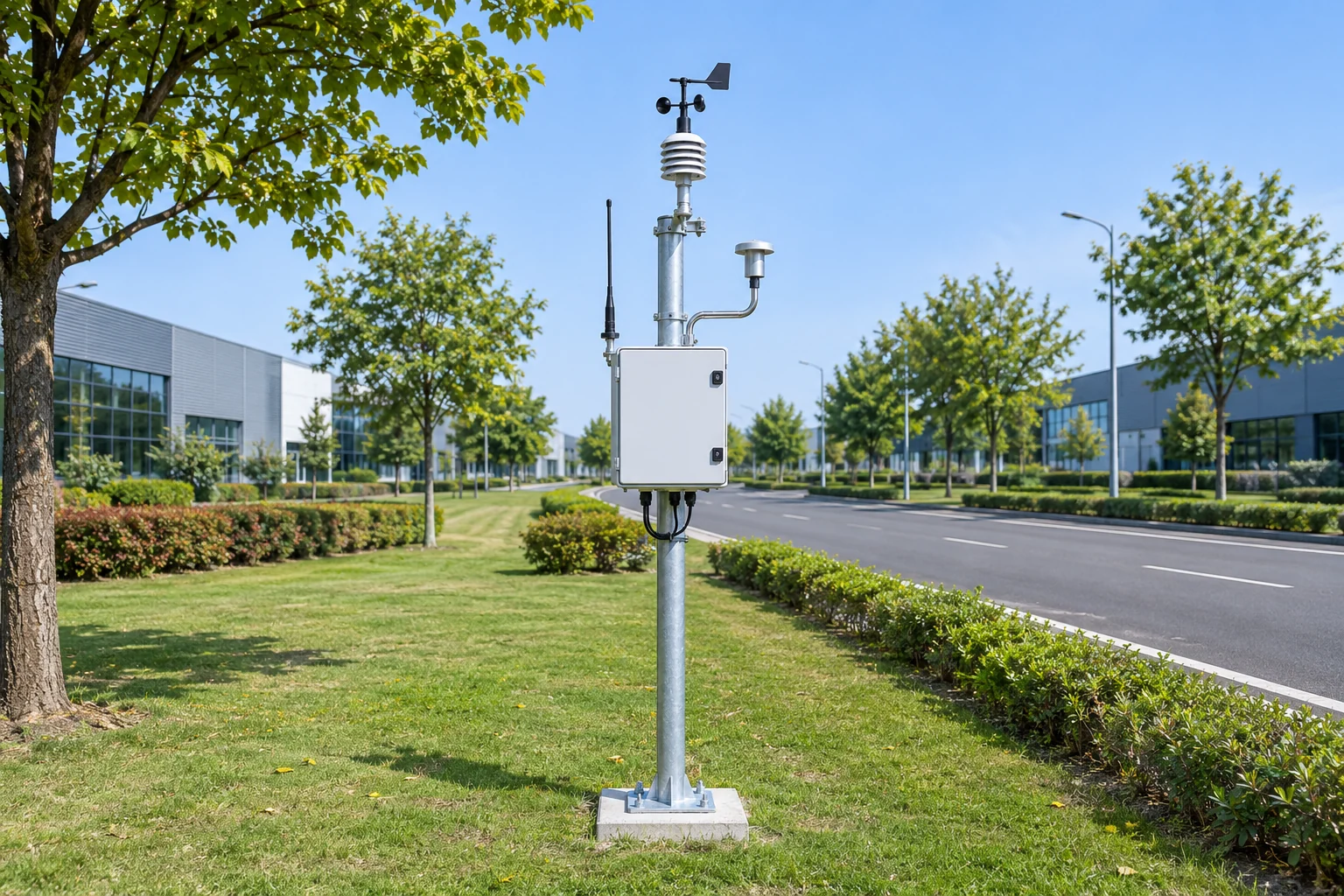
Anemometer types should be compared by the measurement task rather than by a single preferred technology. Outdoor wind observation, ventilation surveys and fixed duct monitoring impose different conditions. Define the quantity, environment and reporting requirement before asking suppliers to propose a measuring principle.
Compare the main instrument families
| Family | Basic distinction | Question for selection |
|---|---|---|
| Cup | Uses rotating cups for wind-speed measurement | What exposure, starting behavior and service requirements apply? |
| Vane | Uses a rotating vane or propeller arrangement | What orientation and application method are required? |
| Thermal | Uses heat-transfer behavior to infer air movement | What air conditions and contamination limits apply? |
| Ultrasonic | Uses acoustic measurement paths | Which wind components, installation and exposure are supported? |
These are families, not guaranteed feature lists. Wind direction, multi-axis reporting, heating or diagnostic functions must be confirmed for the specific model. Do not assume that every instrument in one family supplies the same outputs or works in the same weather conditions.
Write separate requirements for outdoor and duct work
For outdoor work, identify the exposure, mounting arrangement and the wind quantities the project needs. For indoor or duct work, define the measuring section and whether a point reading, traverse or another method is intended. A handheld survey instrument and a fixed transmitter can serve different roles even if both report a velocity unit.
Specify the required sampling and reporting behavior separately. An average, an instantaneous display and a peak value describe different processing choices. Ask how those values are formed and timestamped instead of inferring response capability from an update rate on a dashboard.
Compare installation and maintenance obligations
- Document mounting constraints and permitted environmental conditions.
- Request performance conditions over the intended operating region.
- Identify access, inspection and any replacement tasks.
- Agree a suitable reference comparison method.
- Record the output configuration and data-processing settings.
A maintenance claim should be tied to the actual model and installation. A design without a rotating assembly may still require inspection or cleaning. Budget for the approved service tasks and ask how performance problems are identified during operation.
Make tender responses comparable
Give each supplier the same application brief and ask them to state exceptions. Separate mandatory measurements from optional channels and accessories. If no proposed model meets a mounting or environmental requirement, resolve the application constraint before comparing prices.
At acceptance, retain the model, configuration, location and method record. Check that the receiving system uses the intended units and averaging. Avoid accepting a direction or gust channel that the final configuration does not actually provide.
Use the outdoor and weather sensor category with the air velocity transmitter guide to organize requirements. Specific ODSENSE wind-sensor models and capabilities require confirmation before purchase.
Frequently asked questions
Does every anemometer measure wind direction?
No. Confirm direction measurement separately for the chosen instrument.
Is one principle best for every application?
No. Compare the actual exposure, measurement method, performance and service requirements.