
Ammonia Gas Monitoring for Livestock Facilities: Sensor Requirements
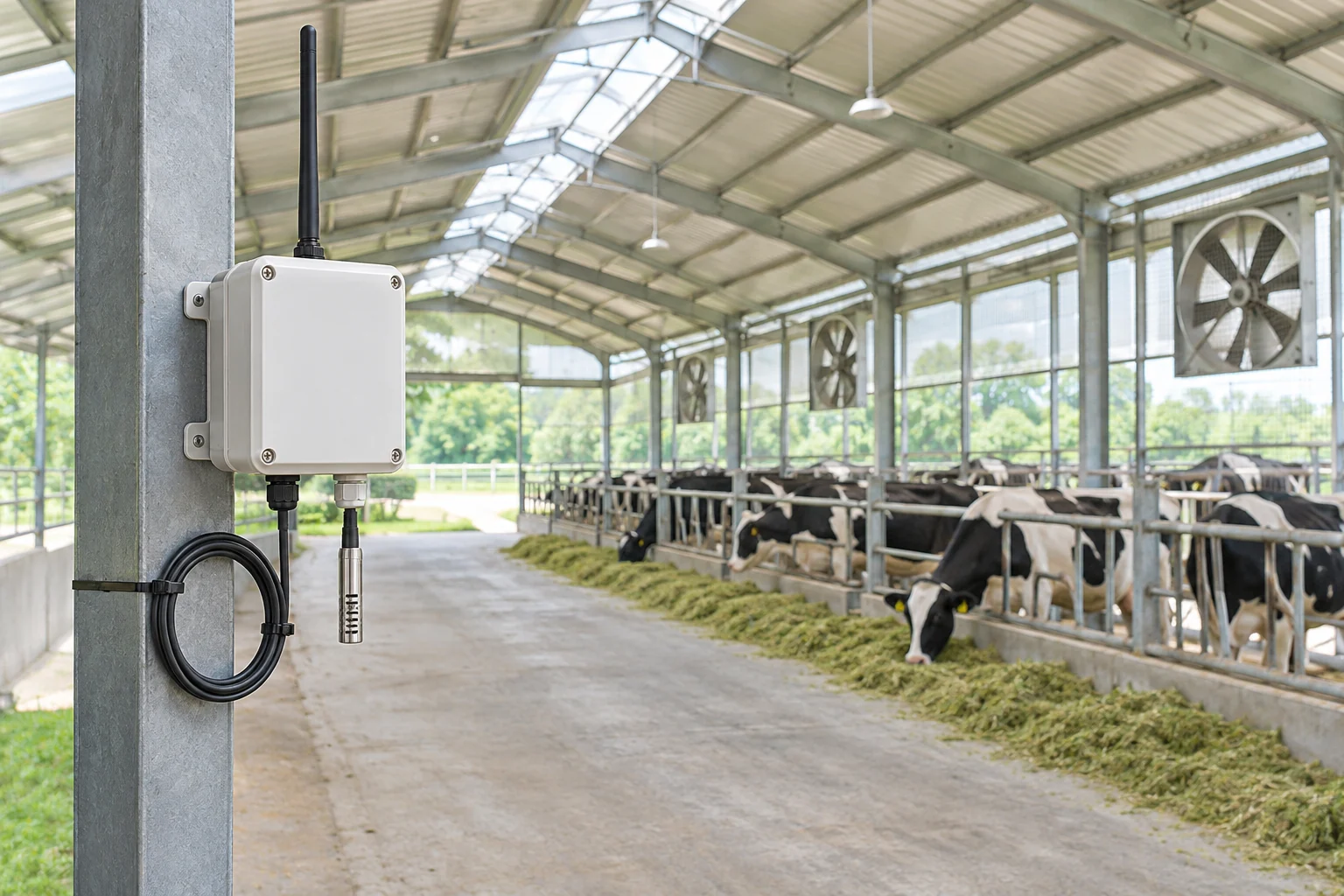
Ammonia gas monitoring in a livestock facility begins with a clear environmental measurement requirement. Specify the NH3 channel, measuring locations and intended use of the record. Do not assume that a general indoor air monitor includes ammonia measurement or that an environmental sensor forms a complete safety system.
Define the quantity and purpose
State which gas is measured, the reported unit and the conditions the instrument must support. Separate a direct NH3 measurement from an odor indication or another broad gas response. Ask the supplier to identify the sensing method and the actual fitted channel.
| Project information | Supplier confirmation needed |
|---|---|
| Gas channel | Specific NH3 measurement and documented interpretation |
| Environment | Applicable temperature, humidity and exposure limits |
| Measuring locations | The zones or local conditions represented |
| Service | Approved checking, calibration and cleaning arrangements |
| Data use | The operational record and any separately designed notification or control requirements |
Plan positions with the facility operator
Review the layout, ventilation arrangement, animal areas and service access. Decide whether a point is intended to characterize a zone or investigate a local condition. Keep those purposes distinct in the data so a local observation is not automatically presented as representative of the complete building.
Record the final installation and relevant operating conditions. When management or ventilation changes, review whether the measuring points still answer the intended question. This is a measurement-planning task rather than a universal mounting-height rule.
Request model-specific performance and care information
Ask how the proposed channel responds under the expected conditions and what limitations are documented. Obtain the applicable reference-check and calibration procedure. Do not transfer a maintenance interval or calibration setting from a different gas instrument.
List any consumables, replacement parts and service responsibilities. Confirm what the receiving system obtains from the instrument, including any available status information. Keep optional channels separate from standard equipment in the purchase record.
Accept the complete measurement record
- Confirm gas identity, units and data scaling.
- Identify each measuring point consistently.
- Retain configuration and reference-check records.
- Test the recognition of missing or invalid data.
- Specify and validate any safety, alarm or automatic-action role separately.
Use the livestock environmental monitoring application with the industrial sensor category to prepare the measurement requirements. Confirm the specific device model, fitted options and applicable documents before ordering.
Frequently asked questions
Does a general air-quality monitor necessarily measure ammonia?
No. Obtain confirmation of the actual NH3 channel and its method.
Does this guide define an exposure or animal-management limit?
No. The project must obtain the appropriate specialist requirements for its particular operating and safety decisions.