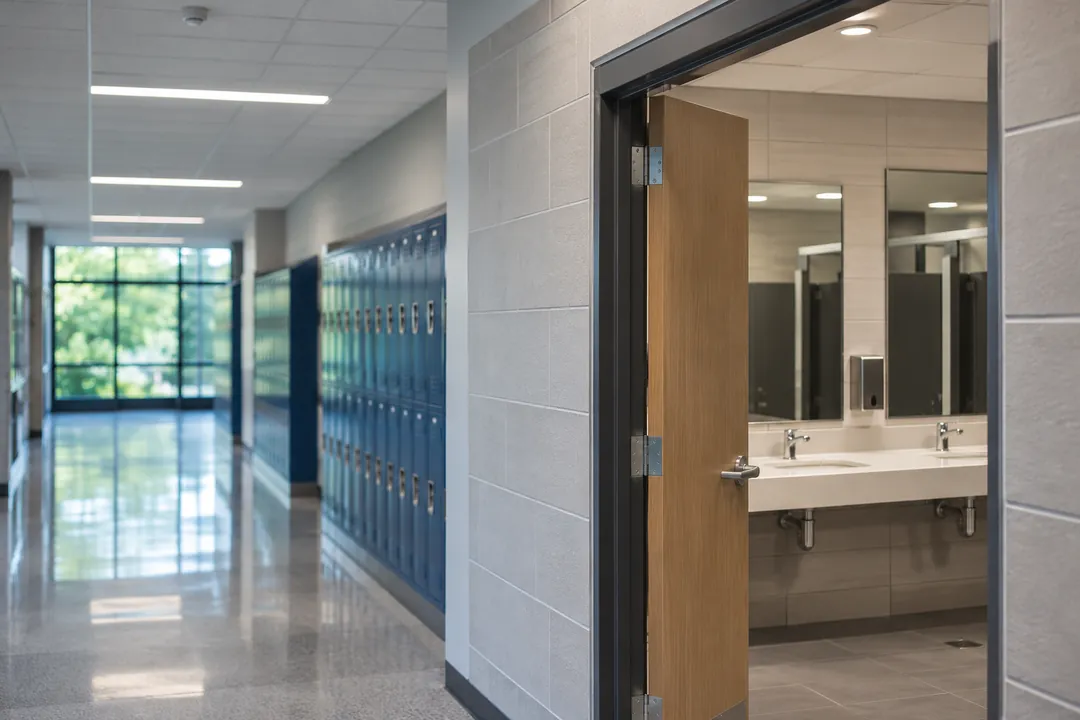
School and campus monitoring
Technical specifications
| Parameter | Specification |
|---|---|
| Operating Voltage | DC 10V~30V (Standard 24V) |
| Operating Current | ≤200mA (@5V Power Supply) |
| Stabilization Time | 2 Minutes |
| Detection Frequency | Data updates every second (Default) |
| Standard Output | Modbus-RS485 |
| Optional Communication | LoRaWAN / 4G / WiFi / Bluetooth Low Energy |
| Housing Material | Flame-Retardant ABS |
| Installation | Ceiling Mount / Wall Mount |
| Dimensions | 100 × 100 × 30 mm |
| Parameter | Specification |
|---|---|
| Operating Temperature | -20°C ~ 55°C |
| Operating Humidity | 0 ~ 99%RH (Non-condensing) |
| Storage Temperature | -30°C ~ 60°C |
| Storage Humidity | 0 ~ 99%RH (Non-condensing) |
| Model | Communication | Application |
|---|---|---|
| YF100-S(R) | RS485 Modbus RTU | Wired campus safety systems and local control networks |
| YF100-S(L) | LoRaWAN | Large-area wireless deployment across multiple school buildings |
| YF100-S(W) | WiFi | Schools with existing wireless network infrastructure |
| YF100-S(B) | Bluetooth Low Energy | Local configuration and short-distance communication |
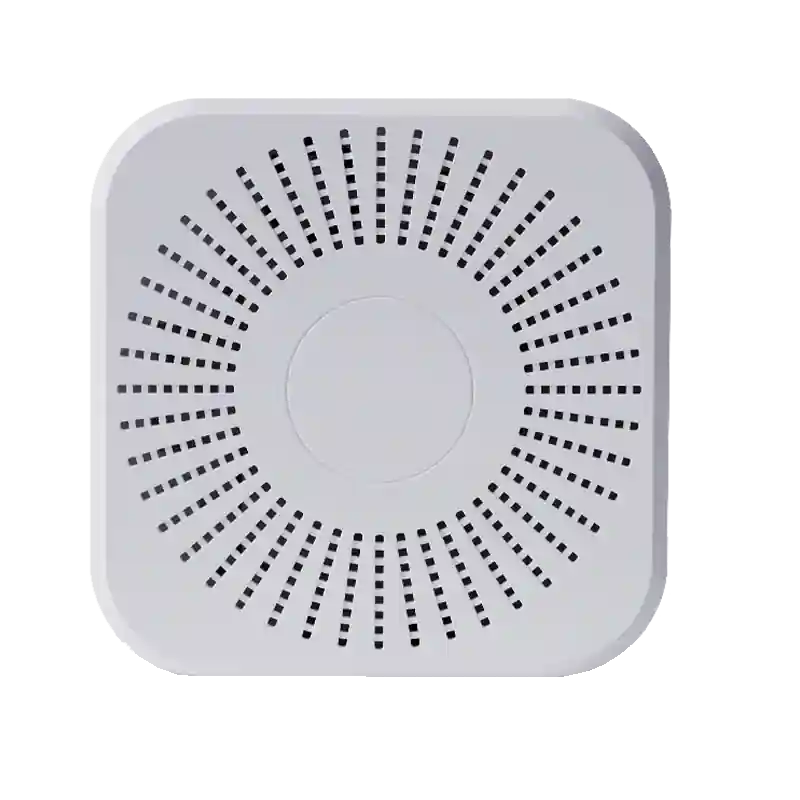
YF100-S vape detection and acoustic event sensor
The YF100-S is a monitoring device intended for school and campus environments where vaping-related aerosols and abnormal acoustic events are of interest. It combines air sensing with an acoustic sensing function and can be incorporated into a wider monitoring and response process.
Plan monitoring around the location
Schools and other facilities have spaces with different occupancy patterns, ventilation and privacy requirements. Begin with the areas the operator is permitted to monitor and the events the facility wants staff to review. Consider the position of doors, ventilation outlets, obstructions and routine activity when selecting measurement points.
A sensor reports conditions at its installed position. Events, background conditions and airflow can vary across a room or building, so the deployment plan should account for the actual space. The installation should follow local rules and the facility’s policies for notices, access and event handling.
Connect the selected version
The product specifications list RS485 Modbus RTU as the standard output and LoRaWAN, WiFi, 4G and Bluetooth Low Energy as optional communication methods. The ordering table identifies specific versions. Confirm the model code, power supply and receiving system before installation rather than assuming every communication interface is included.
Define how the receiving system presents events, which staff members are responsible for reviewing them and how the facility responds. Review any alert thresholds and procedures with the site’s own safeguarding and privacy policies.
Installation and commissioning
The product table lists ceiling and wall mounting and a flame-retardant ABS housing. Choose an accessible location and follow the supplied mounting, wiring and commissioning instructions for the selected version. Keep the sensing area clear and protect the device from damage or obstruction.
The listed stabilization time is two minutes and the default data update frequency is once per second. Check communication and the configured event workflow during commissioning. Record the installed model, location and system settings so that future maintenance and changes can be tracked.
Inspection and maintenance
Inspect the housing, sensing openings and connections routinely. Clean using the approved method and review unexpected events in the context of the actual environment. Reassess the monitoring setup when room use, ventilation or surrounding equipment changes.
For product selection, provide the type of facility, locations to be monitored, number of devices, available power and desired interface. Explore the indoor air quality range and indoor monitoring solution.
Selection and integration
Industry applications
- Schools and education
- Facility management