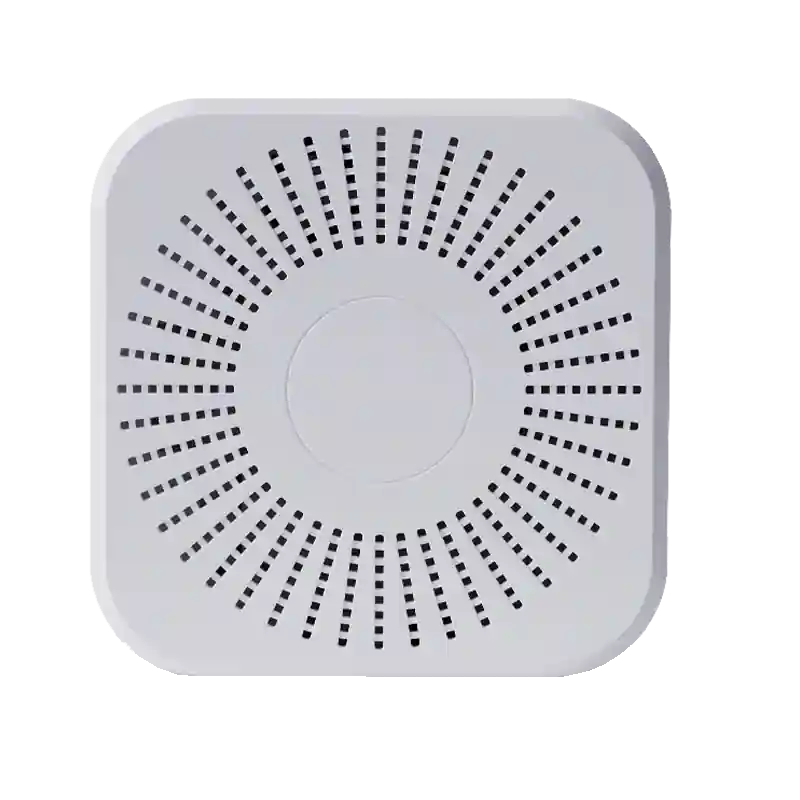
YF100 · Indoor air quality monitor
The YF100 is an indoor air quality monitor with model-dependent measurement channels and communications. Specify the required particles, gases and environmental parameters in your enquiry.
Technical information
A clear project brief is the first step toward a suitable sensor. Define the conditions before choosing the hardware.
Specify the medium, target parameters, measurement range, required accuracy, installation conditions and controller interface. Suitability must be checked against an approved datasheet.
Specifications below are transcribed from the supplier page. Final configuration, calibration and suitability require confirmation before ordering. Source discrepancies require confirmation; no values have been inferred.
The YF100 is an indoor air quality monitor with model-dependent measurement channels and communications. Specify the required particles, gases and environmental parameters in your enquiry.
Technical informationSpecify the medium, target parameters, measurement range, required accuracy, installation conditions and controller interface. Suitability must be checked against an approved datasheet.
This page outlines project planning, not an installed customer case or a guaranteed outcome. Confirm product suitability, site conditions and the integration plan before procurement.
RS485 Modbus and LoRaWAN are integration options to discuss, not confirmed features of every product. Check protocol, power supply and network compatibility for the selected model.
Specify the medium, target parameters, measurement range, required accuracy, installation conditions and controller interface. Suitability must be checked against an approved datasheet.
No. Interfaces, power supplies and accessories depend on the confirmed model. Request a written configuration identifying standard and optional items before ordering.
You can prepare and download an enquiry draft. Mailbox, online submission and WhatsApp are pending configuration; delivery has not been tested.
Indoor air quality sensors help a building team understand conditions at the point of measurement. Start with the specific question and select only the measurements needed for the application.
A carbon dioxide sensor can help assess changes in occupied indoor spaces. Interpret readings alongside occupancy, outdoor air and ventilation operation; CO₂ alone does not measure every indoor pollutant.
A temperature and humidity sensor helps describe thermal and moisture conditions. Place the sensing element away from direct sunlight, heat sources and air jets when a representative room reading is required.
Where particles or other gases matter, specify the parameter and sensing method separately. Available channels depend on the selected model and configuration; confirm each before ordering.
Consider the occupied zone, airflow, nearby equipment and access for service. A sensor close to a local source may report conditions that differ from the rest of the room.
Define the receiving building management system, power supply and output. RS485 Modbus or wireless interfaces must be checked against the exact ordering code.
Ask for the applicable accuracy conditions, calibration guidance and replacement or maintenance requirements. The product datasheet governs the approved configuration.
Share your application, target parameters and integration requirements.